
Car Interior Deep Cleaning in Al Quoz: The Complete Guide
If you’ve ever opened your car door after a long week and been hit with a smell you can’t quite place, or looked down at your seats and noticed stains that seem to have appeared out of nowhere, you already understand why interior deep cleaning matters. Living and driving in Al Quoz — a hub surrounded by industrial units, warehouses, workshops, and constant construction dust — means your car’s cabin takes on a different kind of daily punishment than a car driven purely on clean city roads.
This guide walks through everything worth knowing about car interior deep cleaning specifically in the context of Al Quoz: why the area is particularly hard on interiors, what a genuine deep clean actually involves, the difference between a quick vacuum and real deep cleaning, and how to keep your car’s cabin in good condition between professional sessions. No shortcuts, no vague marketing language — just a proper, detailed breakdown.
Why Al Quoz Is Especially Tough on Car Interiors
Al Quoz isn’t a typical residential neighborhood. It’s one of Dubai’s busiest industrial and commercial districts, home to warehouses, auto workshops, furniture factories, art galleries, and a constant flow of trucks and heavy vehicles. That combination creates a very specific set of conditions that are harder on a car’s interior than most other parts of the city.
Airborne Dust and Fine Particulate
Construction activity, unpaved lots, and heavy vehicle movement kick up a level of fine dust that settles everywhere — not just on the exterior of your car, but inside it too, every time a door or window is opened. This dust works its way into air vents, seat seams, door pockets, and carpet fibers far faster than in cleaner, more residential parts of the city.
Extreme Heat Exposure
Cars parked outside warehouses or workshop yards in Al Quoz often sit for hours under direct sun with little to no shade. Interior temperatures inside a parked car in Dubai summer can climb well past what most materials are designed to handle comfortably. This heat accelerates the breakdown of leather, vinyl, and plastic trim, and it also bakes in odors, spilled liquids, and grime, making them far harder to remove later if left untreated.
Frequent In-and-Out Use
Many vehicles in Al Quoz are used for business purposes — moving between workshops, meeting clients, transporting tools or materials, or simply being driven more frequently throughout the day than a typical commuter car. More usage naturally means more dirt transfer, more wear on high-touch surfaces, and less time for the interior to simply “rest” clean.
What “Deep Cleaning” Actually Means
The phrase “interior cleaning” gets used loosely, and it’s worth being precise about what separates a basic clean from an actual deep clean, because the difference in both effort and results is significant.
Basic Interior Cleaning
A basic clean typically covers vacuuming visible surfaces, wiping down the dashboard and door panels, and maybe a quick glass clean. It’s fast, it makes the car look presentable, but it does very little for what’s actually embedded in fabric, foam, and hard-to-reach areas.
True Deep Cleaning
A genuine deep clean goes several layers further. It involves removing and treating dirt that has settled deep into carpet fibers and seat foam, extracting old stains rather than just masking them, addressing odors at their source instead of covering them with fragrance, and reaching into areas that never get touched during routine cleaning — under seats, inside air vents, along door seals, and within seams and stitching.
Why the Distinction Matters
A car that only ever gets a basic wipe-down might look clean on the surface while the actual buildup of allergens, bacteria, and grime keeps accumulating underneath. Over months and years, this buildup is what leads to persistent odors, discoloration, and premature wear of interior materials — issues that a quick vacuum session simply cannot resolve.
The Full Deep Cleaning Process, Step by Step
To really understand what you’re paying attention to when evaluating interior cleaning, it helps to walk through what a properly executed deep clean actually looks like from start to finish.
1. Initial Inspection and Assessment
Before any product touches the interior, a proper deep clean starts with an assessment of material types — leather, fabric, alcantara, vinyl — along with identifying specific problem areas like stains, odors, or sun-damaged trim. Different materials require different products and techniques, so skipping this step often leads to using the wrong approach on the wrong surface.
2. Removing Loose Debris
Floor mats are removed and cleaned separately. Loose items, trash, and debris are cleared out completely. This step alone often reveals surprising amounts of sand, crumbs, and small debris that have settled into crevices around seats and center consoles.
3. Dry Vacuuming — Every Surface, Not Just the Floor
A thorough vacuum pass covers seats, carpets, headliner, trunk space, door pockets, and often includes brush attachments to loosen dust trapped in seams, air vents, and stitching before any liquid product is applied. This step is far more thorough than a typical quick vacuum and usually takes considerably longer.
4. Pre-Treatment of Stains and High-Contamination Zones
Visible stains — coffee spills, food marks, ink, or general grime buildup on frequently touched areas like the steering wheel and door handles — are treated with targeted pre-treatment solutions before general cleaning begins. This gives cleaning agents time to break down stubborn residue rather than just being wiped over it.
5. Shampooing and Extraction for Fabric Seats and Carpets
For fabric interiors, a proper deep clean typically involves a hot water extraction process — where a cleaning solution is worked into the fibers and then extracted back out along with the dirt it’s lifted, rather than simply scrubbing the surface and leaving moisture and loosened grime behind. This is the step that makes the biggest visible difference in fabric seats and carpets that have years of accumulated buildup.
6. Leather Cleaning and Conditioning
Leather seats need an entirely different approach from fabric. A proper leather clean involves a pH-balanced cleaner to lift dirt and oils without stripping the leather’s natural protective layer, followed by a conditioning treatment to restore moisture and flexibility. Skipping conditioning is one of the most common mistakes in interior cleaning — cleaning alone can actually leave leather drier and more prone to cracking over time, especially in Al Quoz’s heat.
7. Dashboard, Trim, and Plastic Surface Detailing
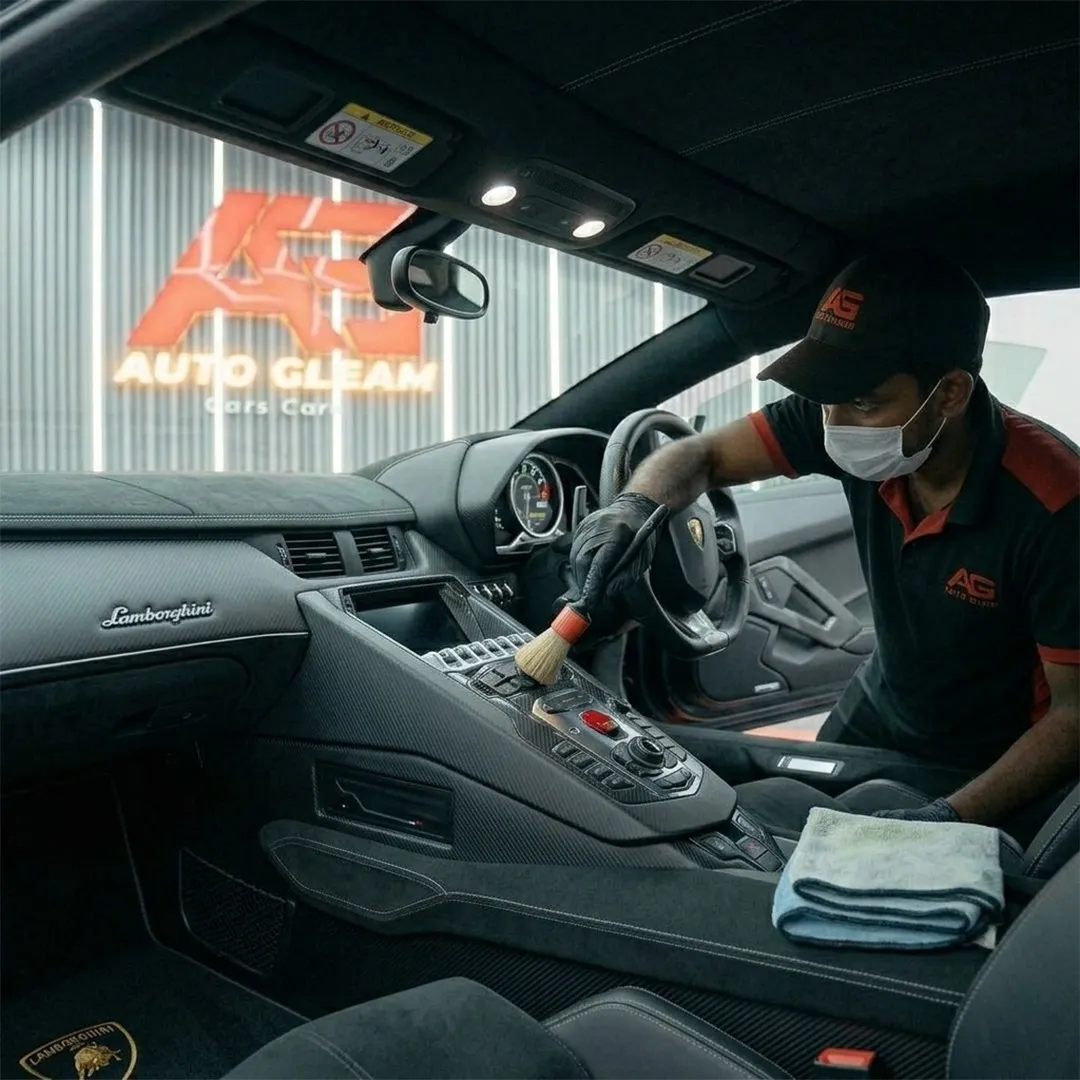
All hard surfaces — dashboard, center console, door panels, air vents — are cleaned with appropriate interior detailing products, paying particular attention to grooves, buttons, and vent slats where dust naturally accumulates and is easy to miss during routine cleaning.
8. Headliner and Ceiling Cleaning
The headliner is often completely overlooked in casual cleaning, yet it absorbs a surprising amount of odor and airborne residue over time. A gentle, careful cleaning approach is used here since headliner fabric is typically more delicate and prone to sagging if oversaturated.
9. Air Vent and AC System Attention
Given how much dust circulates in Al Quoz, air vents deserve particular focus. Vents are cleaned both externally and, where possible, treated to address dust and buildup that contributes to musty smells coming through the air conditioning system.
10. Glass Cleaning From the Inside
Interior glass often develops a hazy film from off-gassing plastics and general use that’s easy to miss until you’re driving directly into sunlight. A proper interior clean always finishes with a streak-free interior glass pass.
11. Odor Neutralization
Rather than simply spraying a fragrance over existing odors, genuine odor treatment targets the source — whether that’s bacteria in fabric, trapped moisture, or organic residue from spills — using neutralizing treatments rather than masking agents.
12. Final Inspection and Drying
The interior is given time to properly dry, particularly after any extraction or shampooing process, since trapped moisture can quickly lead to new odor problems if the car is closed up too soon. A final walk-through inspection catches anything that needs a second pass.
Common Interior Problems Specific to Al Quoz Driving Conditions
Fine Dust Embedded in Fabric Seats
Regular vacuuming picks up surface dust but rarely reaches what has settled deep into seat foam and fabric weave over weeks of exposure to Al Quoz’s dustier air quality. This is one of the most common reasons cars in this area need more frequent deep cleaning compared to vehicles used primarily in cleaner, greener parts of the city.
Sun-Baked Odors
A car left in direct sun for extended periods, common when parked outside a workshop or warehouse without shade, tends to “bake in” odors far more aggressively than a car parked in shaded or covered areas. Spilled coffee, food residue, or even just accumulated sweat and humidity can turn into a persistent smell that keeps returning even after a quick clean.
Cracking and Fading Leather or Vinyl
Prolonged heat exposure without conditioning treatment accelerates the natural drying-out process of leather and vinyl surfaces, leading to premature cracking, fading, and a rough, brittle texture over time.
Grease and Grime From Frequent Workshop Visits
Vehicles that regularly visit workshops, garages, or industrial sites often pick up grease and grime transfer onto seats, steering wheels, and door handles from hands, clothing, or tools carried in and out of the vehicle.
Fabric vs Leather vs Alcantara: Why the Cleaning Method Matters
Fabric Interiors
Fabric seats are porous and absorb spills, oils, and odors deep into their fibers. They respond best to hot water extraction methods that lift embedded dirt rather than surface-level scrubbing, which can actually push contaminants deeper into the material.
Leather Interiors
Leather requires pH-balanced, non-stripping cleaners followed by conditioning. Using the wrong products, particularly anything with harsh alcohol content, can dry out leather and accelerate cracking, especially under Dubai’s heat conditions.
Alcantara and Suede-Like Materials
These materials are especially delicate and prone to watermarking or texture damage if cleaned incorrectly. They require specific low-moisture techniques and gentle brushing to avoid flattening or discoloring the nap of the material.
DIY Cleaning vs Professional Deep Cleaning
What DIY Cleaning Can Realistically Achieve
A home vacuum and some interior wipes can maintain a reasonably tidy-looking cabin between deeper cleans, and there’s real value in doing this regularly. It helps slow down dirt accumulation and keeps the car pleasant day to day.
Where DIY Cleaning Falls Short
Home vacuums typically lack the suction power and extraction capability to pull embedded dirt out of seat foam and carpet padding. Household cleaning products are often not pH-balanced for automotive materials, and incorrect product use on leather or alcantara can cause damage that’s difficult to reverse. Odor issues in particular are almost never fully resolved by surface cleaning or air fresheners alone, since they only mask the smell rather than eliminating its source.
When Professional Deep Cleaning Becomes Worth It
If your car has persistent odors, visible staining that doesn’t respond to spot cleaning, leather that’s starting to feel dry or stiff, or simply hasn’t had a proper deep clean in six months or more, that’s typically the point where professional-grade equipment and technique make a genuinely noticeable difference that home cleaning methods can’t match.
How Often Should Interior Deep Cleaning Be Done?
This depends heavily on usage patterns, but as a general guide, vehicles used daily in dustier environments like Al Quoz tend to benefit from deep cleaning more frequently than cars used lightly in cleaner areas. Business or work vehicles that see frequent passengers, tools, or materials moved in and out often need more regular attention than a personal car used mainly for commuting. Families with children or pets typically need more frequent fabric and carpet treatment due to spills and higher general wear. As a rough guideline, most vehicles benefit from a full deep clean every few months, with lighter maintenance cleaning in between.
Simple Habits That Extend the Life of a Deep Clean
Use Sunshades When Parking Outdoors
A simple windshield sunshade reduces interior heat buildup significantly, which slows down odor baking and material degradation between cleans.
Keep a Small Trash Bag in the Car
Having a designated place for wrappers, cups, and small trash prevents debris from settling into seat crevices and floor areas.
Wipe Down High-Touch Areas Weekly
The steering wheel, gear shifter, and door handles accumulate oils and grime faster than most other surfaces simply from regular contact, and a quick wipe-down keeps this from building up.
Address Spills Immediately
The longer a spill sits, especially in Dubai’s heat, the more likely it is to set into fabric or leather permanently. Blotting a spill immediately, rather than letting it dry, makes a significant difference in how easily it can be fully removed later.
Crack Windows Slightly When Parked, If Safe to Do So
Allowing a small amount of air circulation, when it’s safe and secure to do so, helps reduce the buildup of trapped heat and humidity that contributes to musty odors.
Why Odor Removal Requires More Than Just Fragrance
One of the most common misunderstandings about interior cleaning is treating odor as something you cover up rather than something you eliminate. Air fresheners and fragrance sprays only mask smell temporarily, and in many cases the underlying odor returns, sometimes stronger, once the fragrance fades. Genuine odor elimination requires identifying and treating the actual source, whether that’s bacteria trapped in fabric, mold growth in a damp carpet area, or organic residue from an old spill, and using products specifically designed to neutralize odor-causing agents rather than simply overpower them with scent.
The Connection Between Interior Cleanliness and Air Quality
It’s easy to think of interior cleaning purely as a cosmetic concern, but there’s a real air quality dimension too. Dust, allergens, and bacteria that build up in carpets, seats, and air vents don’t stay contained — they circulate through the cabin every time the air conditioning runs. For anyone who spends significant time commuting or working from their vehicle, especially in a dustier environment like Al Quoz, a genuinely clean interior isn’t just about appearances. It has a direct impact on the air you’re breathing during every drive.
Frequently Asked Questions
How long does a full interior deep clean take?
It depends on the vehicle’s size and condition, but a proper deep clean, including extraction and drying time, typically takes several hours rather than a quick thirty-minute service.
Will deep cleaning remove old, set-in stains?
Many older stains can be significantly improved or fully removed with proper extraction and pre-treatment, though results depend on the stain type, how long it’s been set in, and the material involved.
Is deep cleaning safe for leather seats?
Yes, when done correctly with pH-balanced products designed specifically for leather, followed by a conditioning step to restore moisture and prevent drying or cracking.
Can interior deep cleaning remove smoke smell?
Smoke odor is one of the more stubborn smells to fully eliminate since it penetrates fabric, foam, and even plastic trim, but a thorough deep clean combined with proper odor neutralization treatment can dramatically reduce or eliminate it in most cases.
Do I need to remove my car before or after deep cleaning?
Most professional deep cleans include drying time before the vehicle is ready to be driven again, since interiors need to be sufficiently dry to avoid trapping moisture, which can lead to new odor issues.
Is it normal for the interior to feel slightly damp after cleaning?
A slight residual dampness is normal immediately after extraction cleaning, but this should fully dry within a reasonable timeframe. Persistent dampness after a full day can indicate the drying process needs more time or ventilation.
How often should I get my car’s interior deep cleaned in Al Quoz specifically?
Given the higher dust exposure and heat conditions typical of the area, more frequent deep cleaning is generally recommended compared to vehicles primarily driven and parked in cleaner, more residential environments.
Can deep cleaning damage my car’s electronics or infotainment screen?
When done properly with appropriate products and techniques, sensitive electronics and screens are cleaned separately using safe, non-abrasive methods specifically suited to those surfaces.
What’s the difference between interior detailing and interior deep cleaning?
The terms are often used interchangeably, but generally “detailing” implies a more comprehensive service including protective treatments like conditioning and UV protection, while basic “cleaning” may refer to just the cleaning stage without additional finishing treatments.
Does deep cleaning help with allergies?
Removing accumulated dust, pollen, and allergens from carpets, seats, and air vents can meaningfully improve cabin air quality, which may help reduce allergy symptoms for sensitive individuals during regular driving.
Will my car smell like chemicals after a deep clean?
A properly executed deep clean, followed by adequate drying and ventilation, should not leave a strong chemical smell. Any initial product scent typically fades quickly once the interior is fully dry and aired out.
Can fabric seats be fully restored if they’re badly stained?
Significant improvement is usually achievable, though results depend on the age, type, and severity of staining. Some very old or deeply set stains may lighten substantially without being entirely invisible.
Is alcantara harder to clean than regular fabric?
Yes, alcantara requires more careful, low-moisture techniques compared to standard fabric, since it’s more prone to watermarking and texture damage if not handled correctly.
Does interior deep cleaning include the trunk area?
A thorough deep clean typically includes the trunk space as well, since it accumulates dust and odor just like the main cabin, especially in vehicles used to transport tools, equipment, or materials.
Can I request only specific areas to be deep cleaned instead of the whole interior?
Focused cleaning on specific problem areas, like just the seats or just carpet extraction, is generally possible depending on what’s needed, rather than always requiring a full interior service.
What causes that musty smell in cars parked outside for long periods?
Musty odors typically develop from trapped humidity combined with organic material, like dust or minor spills, that hasn’t had a chance to properly dry out, creating an environment where odor-causing bacteria can develop.
How soon after deep cleaning can I drive my car normally?
Once the interior has been given adequate time to fully dry, the vehicle can be used completely normally, with no lingering restrictions on regular driving or seat use.