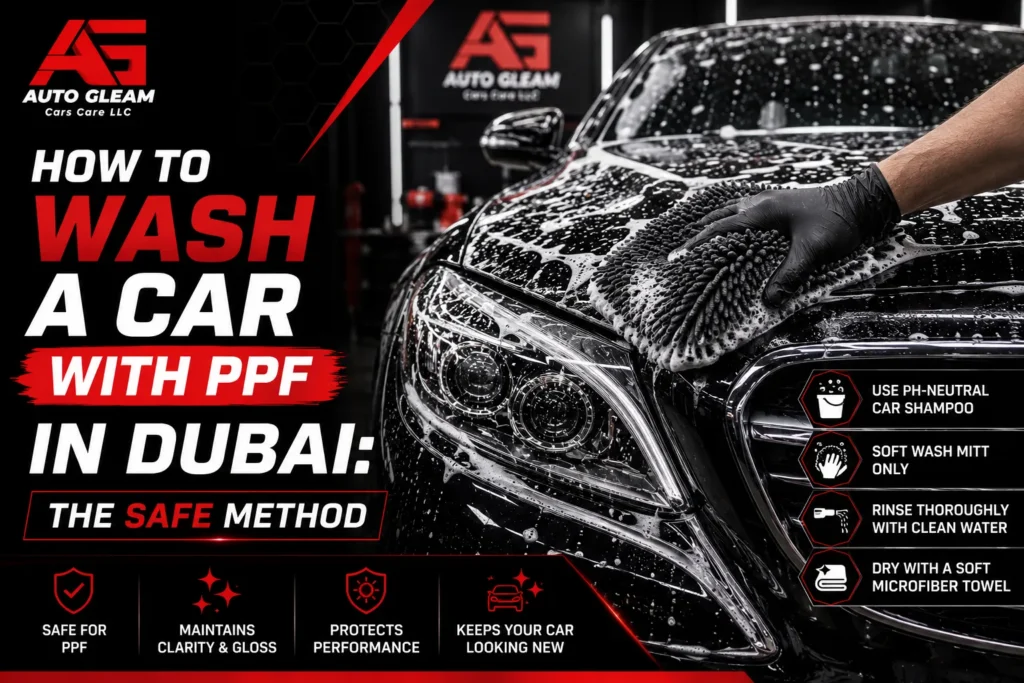
How to Wash a Car with PPF in Dubai: The Safe Method
Getting paint protection film installed is usually a fairly considered decision. You’ve thought about it, maybe compared it to ceramic coating, decided it was worth the investment to physically shield your bonnet, bumper, or mirrors from stone chips and road debris. But here’s the part that catches a lot of owners off guard afterward: washing a car with PPF isn’t quite the same as washing a normal painted car, and doing it the wrong way can genuinely shorten the film’s lifespan or cause problems you didn’t expect.
This becomes even more relevant in Dubai specifically, where heat, dust, and water quality all interact with PPF differently than they would in a milder, cooler climate. This guide walks through, in real detail, exactly how to wash a car with PPF safely, why certain steps matter more here than elsewhere, and the common mistakes that quietly damage film over time without owners realizing it until it’s too late.
Why Washing PPF Correctly Actually Matters
It’s tempting to think of PPF as an indestructible layer that can handle anything you throw at it, since it’s specifically designed to absorb impact and resist damage. But the film’s outer layer, while tough against physical impact, is still a surface that can be scratched, dulled, lifted at the edges, or discolored if it’s washed carelessly or with the wrong products over time.
PPF Is Not the Same as Painted Clear Coat
Paint protection film is a urethane material, chemically and physically different from a factory clear coat. It has a self-healing top layer in most modern films, meaning light swirl marks can actually disappear with heat exposure, but it’s still vulnerable to improper washing technique, harsh chemicals, and edge damage if you’re not careful.
Poor Washing Habits Undermine the Investment
PPF is meant to be a long-term protective solution, often rated for several years of performance. Washing it incorrectly, consistently, over that entire period can noticeably shorten how long it stays clear, glossy, and properly adhered, essentially working against the very reason it was installed in the first place.
Why Dubai’s Conditions Make PPF Washing Especially Important to Get Right
Constant Dust and Fine Sand
Dubai’s proximity to the desert means airborne sand and dust settle on vehicles constantly, even between wash sessions. If this fine grit isn’t properly rinsed away before contact washing begins, it acts like sandpaper being dragged across the film’s surface, causing fine scratching that accumulates over time.
Intense Heat and Sun Exposure
High temperatures affect how quickly water spots form, how fast washing products evaporate mid-wash, and how the film’s self-healing top layer behaves. Washing technique needs to account for this heat rather than following generic advice meant for cooler climates.
Hard Water Mineral Content
Water in the region can carry a noticeable mineral content, which contributes to stubborn water spotting if water is allowed to air-dry on the surface rather than being properly dried immediately after rinsing.
Frequent Exposure to Construction and Industrial Dust
Particularly in busier commercial and industrial areas, additional airborne particulate from construction sites and heavy vehicle traffic adds another layer of contamination that needs to be handled carefully during washing.
The Safe Washing Method, Step by Step
1. Choose the Right Time of Day
Washing during the cooler parts of the day, early morning or evening, rather than under intense midday sun, helps prevent washing products and water from drying too quickly on the surface, which can leave streaks, spotting, and residue that’s harder to fully remove.
2. Park in Shade If Possible
If shade is available, washing in it reduces surface temperature significantly, giving you more working time before water and soap start evaporating, and also reduces the risk of thermal shock from cold water hitting sun-heated film.
3. Perform a Full Pre-Rinse Before Any Contact
Before any sponge, mitt, or towel touches the film, a thorough rinse with a hose or pressure washer removes as much loose dust, sand, and debris as possible. This single step prevents the majority of fine scratching that would otherwise happen if grit-covered film is touched directly.
4. Use a Snow Foam or Pre-Wash Foam Stage
Applying a foam pre-wash and letting it dwell for a few minutes helps chemically loosen remaining dirt and grime before physical contact, reducing how much abrasive material is still present once you begin hand washing.
5. Rinse the Foam Off Completely
A second thorough rinse after the foam stage clears away the loosened dirt along with the foam itself, leaving a cleaner base for the contact wash stage.
6. Use the Two-Bucket Wash Method
Wash with two separate buckets — one holding soapy water, the other clean rinse water — so that your wash mitt can be rinsed of trapped grit before being reloaded with soap, rather than dragging that same grit across the film on every pass.
7. Use a PPF-Safe, pH-Neutral Wash Soap
Harsh, high-alkaline, or strongly acidic wash products can affect the film’s finish and, over time, its clarity and self-healing properties. A pH-neutral, film-safe wash soap is the safer, more consistent choice.
8. Use a Soft, Dedicated Wash Mitt
A clean, dedicated microfiber wash mitt, kept separate from mitts used on wheels or other dirtier areas of the car, reduces cross-contamination and minimizes scratching risk.
9. Wash With Light, Straight-Line Motions
Rather than scrubbing in circular motions, using straight, front-to-back or top-to-bottom passes with light pressure reduces the chance of creating visible swirl patterns, even though many modern films can self-heal minor marring with heat.
10. Rinse Thoroughly Again After Washing
A final complete rinse removes any remaining soap residue, which can otherwise dry into a hazy film if left on the surface, particularly under Dubai’s fast-evaporating heat.
11. Dry Immediately With a Clean Microfiber Towel or Air Blower
Letting water air-dry, even briefly, in Dubai’s heat significantly increases the risk of mineral water spotting. Drying immediately with a clean, soft microfiber towel, or ideally an air blower for a fully contact-free drying method, helps avoid this almost entirely.
12. Pay Extra Attention to Film Edges
Edges, where film is wrapped or trimmed around body lines, mirrors, and panel gaps, are more vulnerable to lifting if water or cleaning product is allowed to sit and seep underneath. Drying these areas thoroughly and avoiding aggressive scrubbing directly at edges helps protect against premature lifting.
What to Avoid When Washing PPF
Automatic Car Washes With Brushes
Brush-based automatic car washes are one of the most common causes of fine scratching and, in some cases, edge lifting on PPF, since the brushes aren’t gentle and often carry residual grit from previous vehicles. Touchless automatic washes are a safer alternative if a hand wash isn’t practical.
Dish Soap or Household Cleaning Products
Dish soap and many household cleaners are formulated to strip oils and grease aggressively, which can affect film clarity and gloss over repeated use, and are generally not suitable substitutes for proper automotive wash soap.
Dry Wiping Dusty Film
Wiping dust off with a dry cloth, even just to clear a light layer before driving, is one of the fastest ways to introduce fine scratching, since dust particles get dragged across the surface with nothing to lubricate or lift them away first.
Wax and Sealant Products Not Rated for PPF
Some traditional wax products aren’t formulated to be compatible with film and can leave a hazy residue or interfere with the film’s natural finish. Film-specific sealants or ceramic topcoats designed for PPF are a safer choice if additional gloss or protection is desired.
High-Pressure Washing Directly at Film Edges
While a pressure washer is useful for the pre-rinse stage, aiming it directly and closely at film edges or seams with high pressure increases the risk of water forcing its way underneath the edge, which can contribute to lifting over time.
Abrasive Sponges or Old, Contaminated Towels
Any wash media that isn’t soft, clean, and specifically maintained for automotive use increases scratching risk. Old towels that have picked up grit from other uses are a particularly common, avoidable cause of fine marring.
How Often Should a PPF-Wrapped Car Be Washed in Dubai?
Given how quickly dust and sand accumulate in this environment, PPF-wrapped vehicles generally benefit from more frequent washing than might be typical in a cleaner, less dusty climate. Waiting too long between washes allows more contaminant buildup, which increases the abrasive risk once washing does happen. A consistent, moderately frequent washing routine, paired with correct technique, is generally safer for the film than infrequent but harsher cleaning sessions.
Dealing With Specific Contaminants on PPF
Bird Droppings
These should be removed as soon as reasonably possible, since the acidity in bird droppings can etch into film if left baking in Dubai’s heat for extended periods. A gentle rinse followed by light dabbing with a wet microfiber towel, rather than immediate scrubbing, helps lift the residue without grinding it into the surface.
Tree Sap and Tar
Dedicated, film-safe tar and sap removal products are the safer route here rather than generic solvents, which can sometimes affect film clarity if used too aggressively or too frequently.
Bug Splatter
Softening bug residue with a dedicated bug-removal spray or a simple pre-soak before washing prevents the need for aggressive scrubbing, which is one of the more common causes of localized scratching on the front bumper and hood, the areas most often protected by PPF in the first place.
Water Spots From Previous Washes
If mineral water spots have already formed from a previous less-careful wash, a dedicated water spot remover formulated for automotive surfaces, used gently, is generally more effective and safer than attempting to scrub them out with regular wash soap alone.
Drying Technique Deserves Its Own Attention
Why Drying Matters as Much as Washing
A surprising amount of film damage and water spotting doesn’t happen during the washing stage at all — it happens afterward, when water is left to air-dry unevenly under intense heat, leaving mineral deposits baked onto the surface.
Using an Air Blower as the Safest Option
A dedicated air blower, or even a leaf blower reserved for this purpose, removes water from seams, mirrors, and edges without any physical contact at all, which is the lowest-risk drying method available for film-wrapped surfaces.
If Using a Towel Instead
A large, plush, clean microfiber drying towel, used with light blotting and dragging motions rather than aggressive rubbing, is the safer manual alternative if an air blower isn’t available.
Maintaining Gloss and Clarity Between Washes
Using a Film-Safe Quick Detailer
A film-compatible quick detailer spray, used between full washes to remove light dust and refresh gloss, can reduce how often a full wash is needed while keeping the surface looking clean.
Applying a Ceramic Topcoat Over PPF
Many owners choose to apply a ceramic coating specifically formulated for use over film, which adds hydrophobic properties, easier cleaning, and additional UV resistance on top of the film’s existing protection, effectively combining both technologies.
Signs Your Washing Routine May Be Damaging the Film
Increasing Haziness or Dullness
If the film starts looking noticeably duller or slightly hazy compared to when it was first installed, harsh washing chemicals or improper drying technique are common contributing factors worth reviewing.
Visible Fine Scratching That Doesn’t Self-Heal
While many films have self-healing properties that resolve light marring with heat exposure, deeper scratches from improper washing technique may not fully disappear, indicating the washing method needs adjustment going forward.
Edges Starting to Lift
Persistent lifting at film edges, particularly after high-pressure washing sessions, often points to water intrusion beneath the film boundary, which is worth having professionally assessed before it worsens.
What About Ceramic-Coated PPF Specifically?
If a ceramic topcoat has been applied over the film, washing technique remains largely the same, though the added hydrophobic layer generally makes rinsing and drying noticeably easier, since water sheets off faster and dirt adheres less stubbornly. The same gentle, two-bucket, pH-neutral approach still applies, since the underlying film still benefits from careful handling regardless of any additional coating layered on top.
Final Thoughts
Washing a car with PPF in Dubai isn’t drastically different from washing any other car, but the details matter more here because of how aggressively the local environment — heat, dust, sand, and mineral-heavy water — interacts with the film’s surface. A consistent routine built around a thorough pre-rinse, gentle contact washing with the two-bucket method, pH-neutral products, and immediate, thorough drying goes a long way toward keeping film clear, glossy, and properly adhered for as long as it’s designed to last, protecting both the investment in the film itself and the paint underneath it.
Frequently Asked Questions
Can I wash a PPF-wrapped car the same day it’s installed?
Most installers recommend waiting a specific curing period before the first wash, since the film’s adhesive needs time to fully bond, though light rinsing with plain water is often fine sooner if needed.
Is it safe to use an automatic car wash on a car with PPF?
Touchless automatic washes are generally considered safer than brush-based ones, which can cause scratching or contribute to edge lifting due to physical contact and residual grit from previous vehicles.
How soon after installation can I use a pressure washer on PPF?
It’s generally advisable to wait until the film has fully cured before using a pressure washer, and even afterward, to avoid aiming directly and closely at film edges to reduce lifting risk.
Does PPF need special wash soap, or can I use regular car shampoo?
A pH-neutral, automotive-grade wash soap is recommended, whether or not it’s specifically labeled for film, since harsh or high-alkaline products can affect the film’s finish over repeated use.
Can dish soap damage PPF?
Yes, dish soap is formulated to strip oils and grease aggressively, which isn’t ideal for the film’s surface chemistry, and repeated use can dull clarity and gloss over time.
Why does my PPF look hazy even though I wash it regularly?
Haziness is often linked to harsh cleaning products, insufficient rinsing leaving residue behind, or water spots that have baked onto the surface from air-drying in the heat rather than being dried immediately.
How do I remove water spots from PPF without damaging it?
A dedicated, film-safe water spot remover used gently, rather than aggressive scrubbing with regular soap, is generally the safer and more effective approach.
Is it okay to wax a car with PPF?
Traditional wax isn’t always ideal for film, since some formulas can leave residue or aren’t fully compatible with the film’s finish. Film-specific sealants or ceramic topcoats are usually a better choice.
Can PPF self-heal scratches from washing?
Many modern films have a self-healing top layer that can resolve light swirl marks with heat exposure, such as sitting in direct sunlight, though deeper scratches from harsh washing technique may not fully disappear.
How often should I wash a PPF-wrapped car in Dubai?
Given the region’s dust and sand exposure, more frequent washing than in milder climates is generally beneficial, since longer gaps between washes allow more abrasive buildup to accumulate before it’s removed.
Does hot weather affect how I should wash PPF?
Yes, washing during cooler parts of the day and drying immediately after rinsing become especially important in high heat, since products and water evaporate faster and increase the risk of streaking and spotting.
Can I use a leaf blower to dry my car after washing?
Yes, a dedicated air blower or leaf blower reserved for this purpose is actually one of the safest drying methods for film-wrapped vehicles, since it avoids any physical contact with the surface.
What causes PPF edges to lift, and is it related to washing?
Edge lifting can happen for several reasons, but high-pressure washing directly at seams and edges, along with water intrusion from improper drying, are common contributing factors worth avoiding.
Should I remove bird droppings immediately, or can they wait until my next wash?
Removing them as soon as reasonably possible is safer, since the acidity in bird droppings can etch into film if left baking in the heat for an extended period.
Can I apply ceramic coating over PPF, and does it change how I wash the car?
Yes, ceramic coating can be applied over film for added gloss and easier cleaning. The same gentle washing approach still applies, though rinsing and drying typically become noticeably easier due to the added hydrophobic layer.
Is it bad to let my car air-dry naturally after washing?
Yes, particularly in Dubai’s heat, allowing water to air-dry significantly increases the risk of mineral water spotting, so immediate drying with a towel or air blower is the safer approach.
What’s the biggest washing mistake people make with PPF?
Skipping a thorough pre-rinse before contact washing is one of the most common mistakes, since it leaves loose sand and dust on the surface that gets dragged across the film during hand washing, causing avoidable fine scratching.