car Polishing.
Dubai's Premium Auto Care
Where Perfection
Meets Drive.
Expert car detailing, ceramic coating, PPF, and paint correction for daily drivers, luxury vehicles, and everything in between — at our Al Quoz studio or your doorstep.
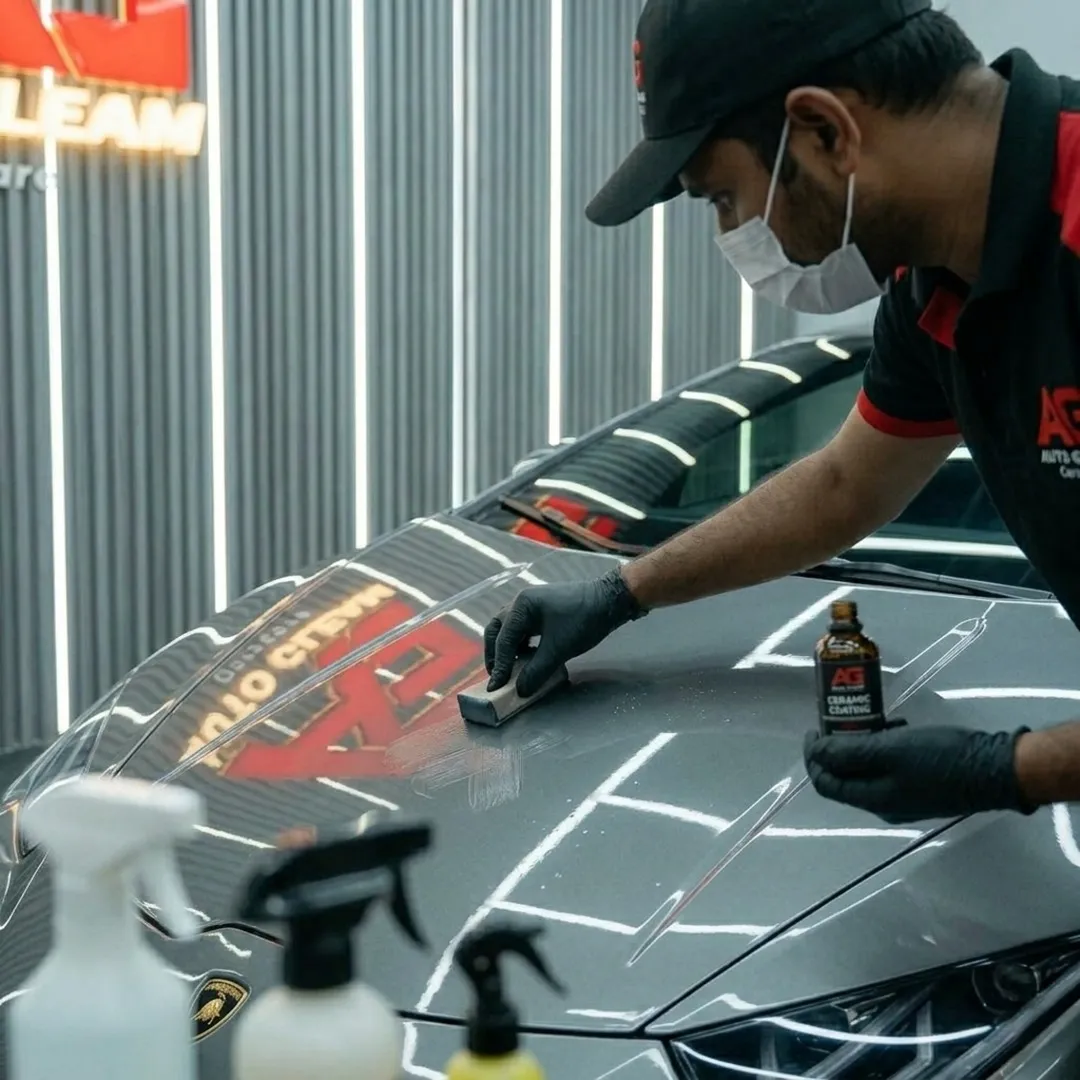
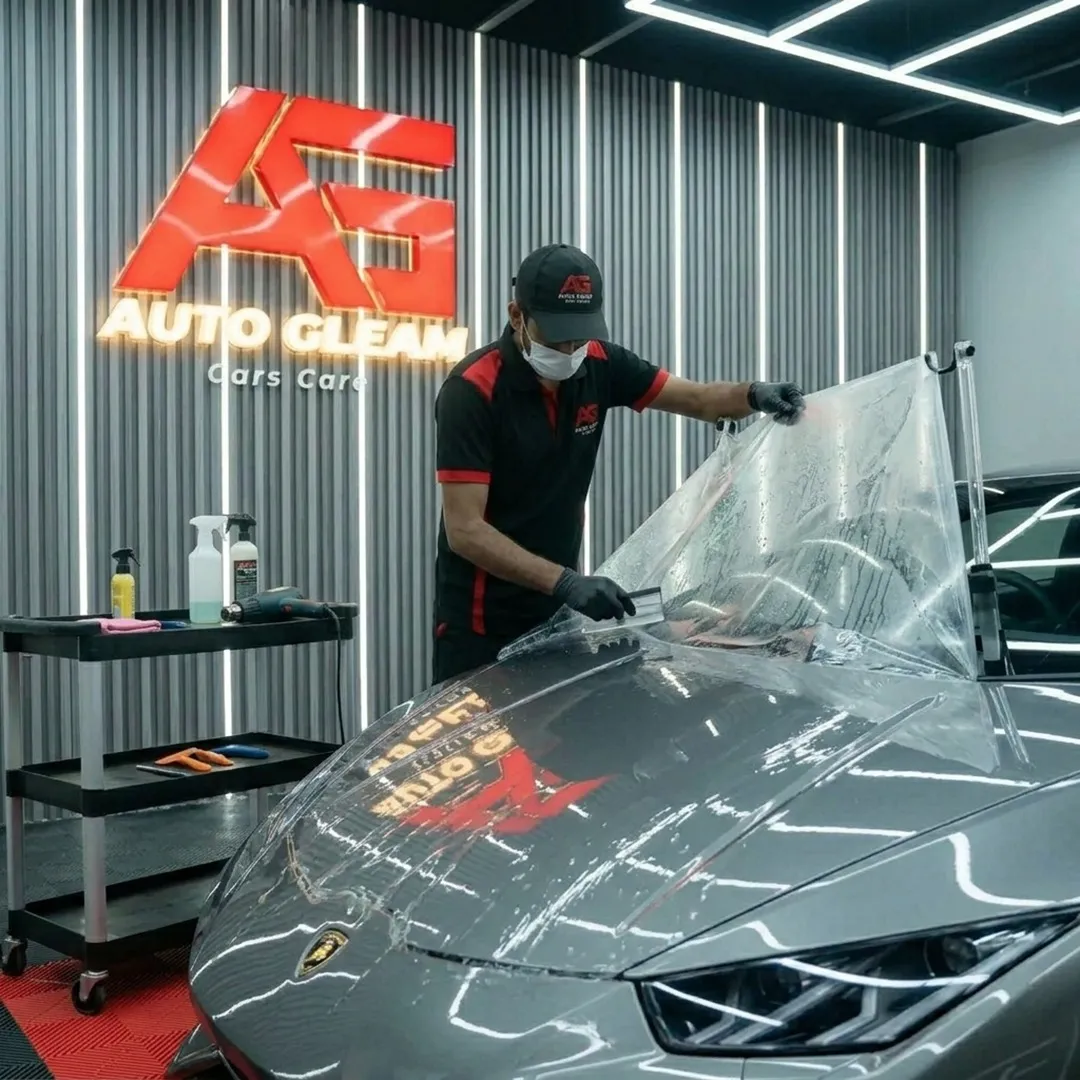
How We Polish
Our Polishing Process
Step 01
Book Appointment
Call or WhatsApp us to schedule your visit. We confirm a time that suits you.
Step 02
Paint Inspection
We examine your paint under professional lighting to identify swirl marks, scratches and oxidation.
Step 03
Wash & Decontaminate
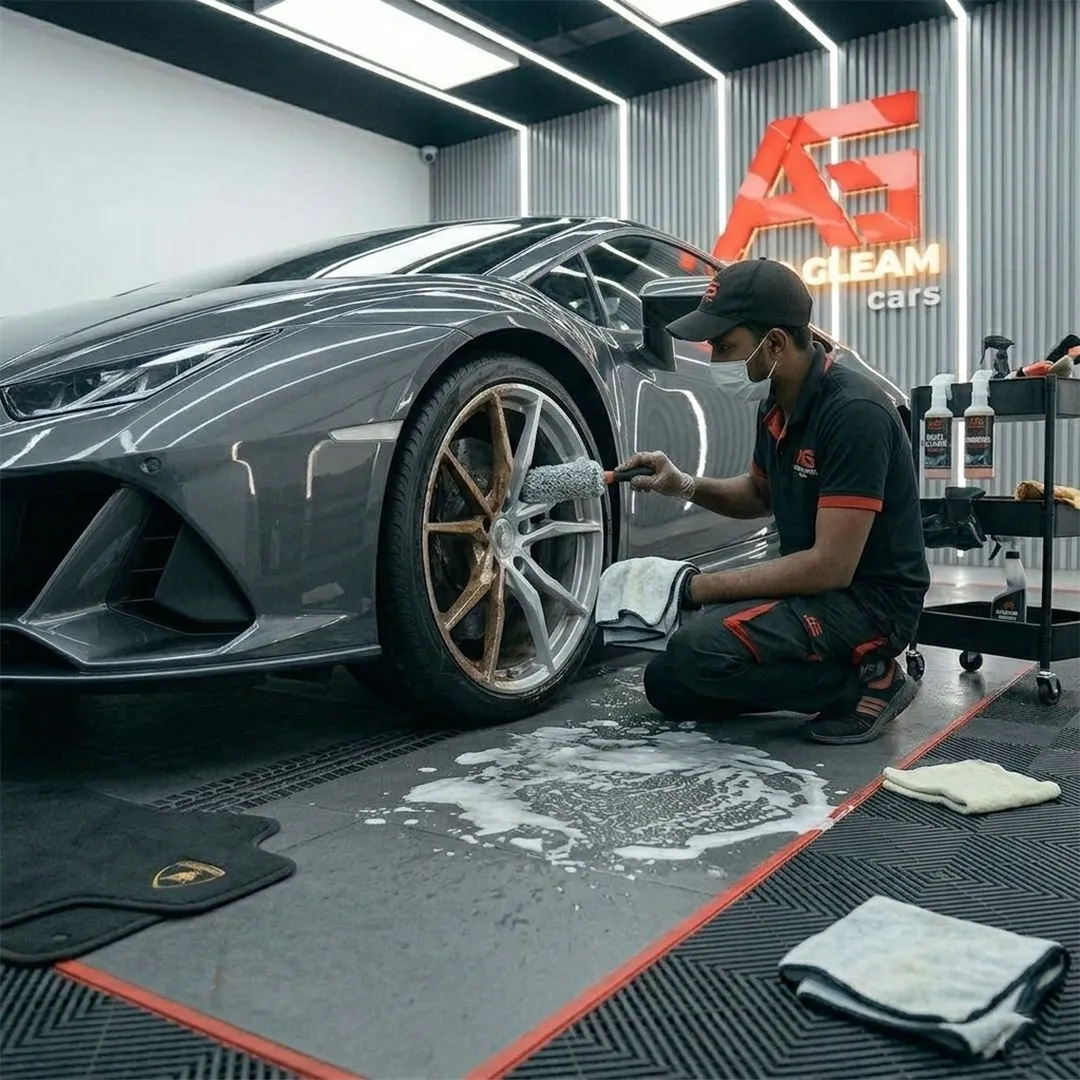
A full foam wash and clay bar decontamination removes all surface bonded contamination before polishing.
Step 04
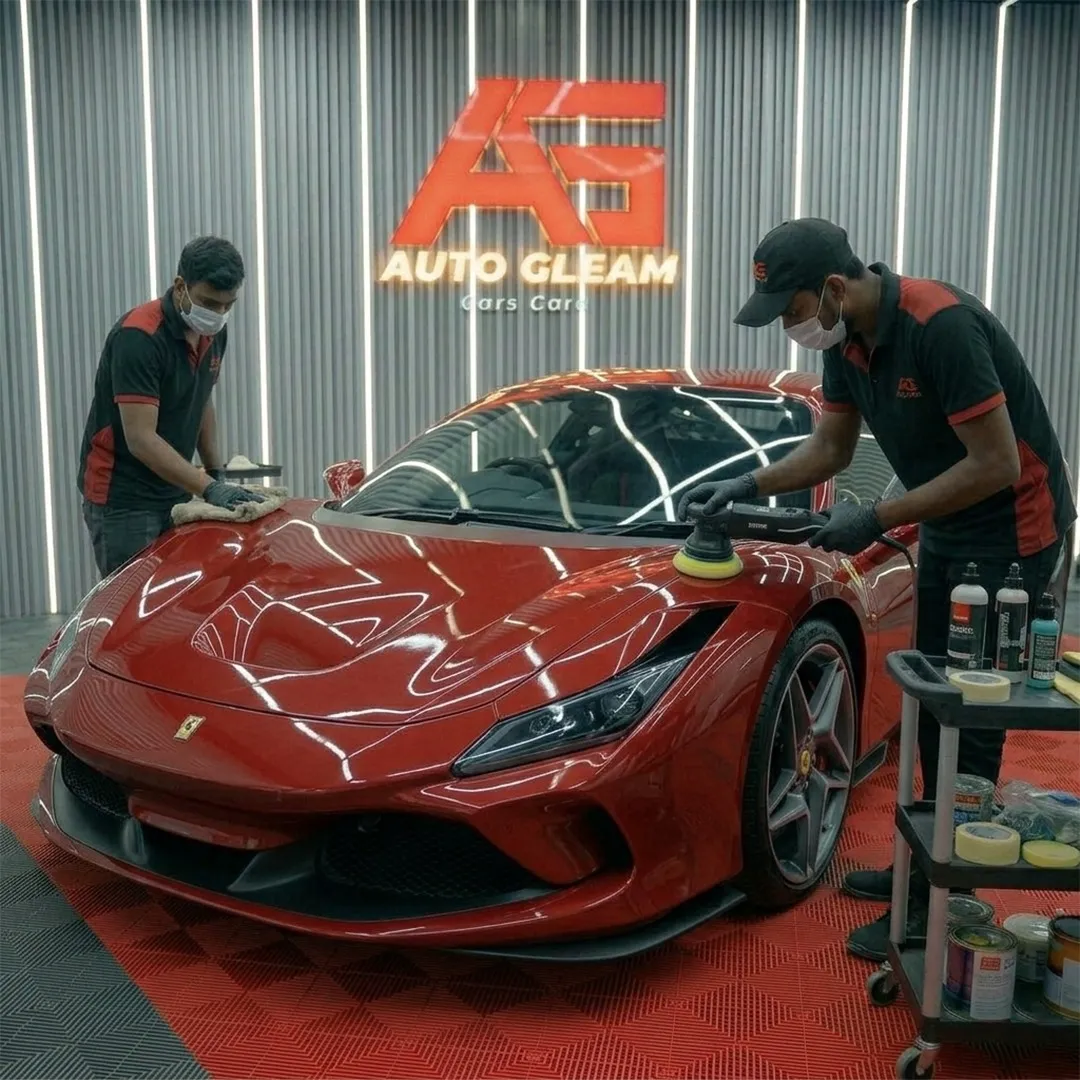
Machine Polish
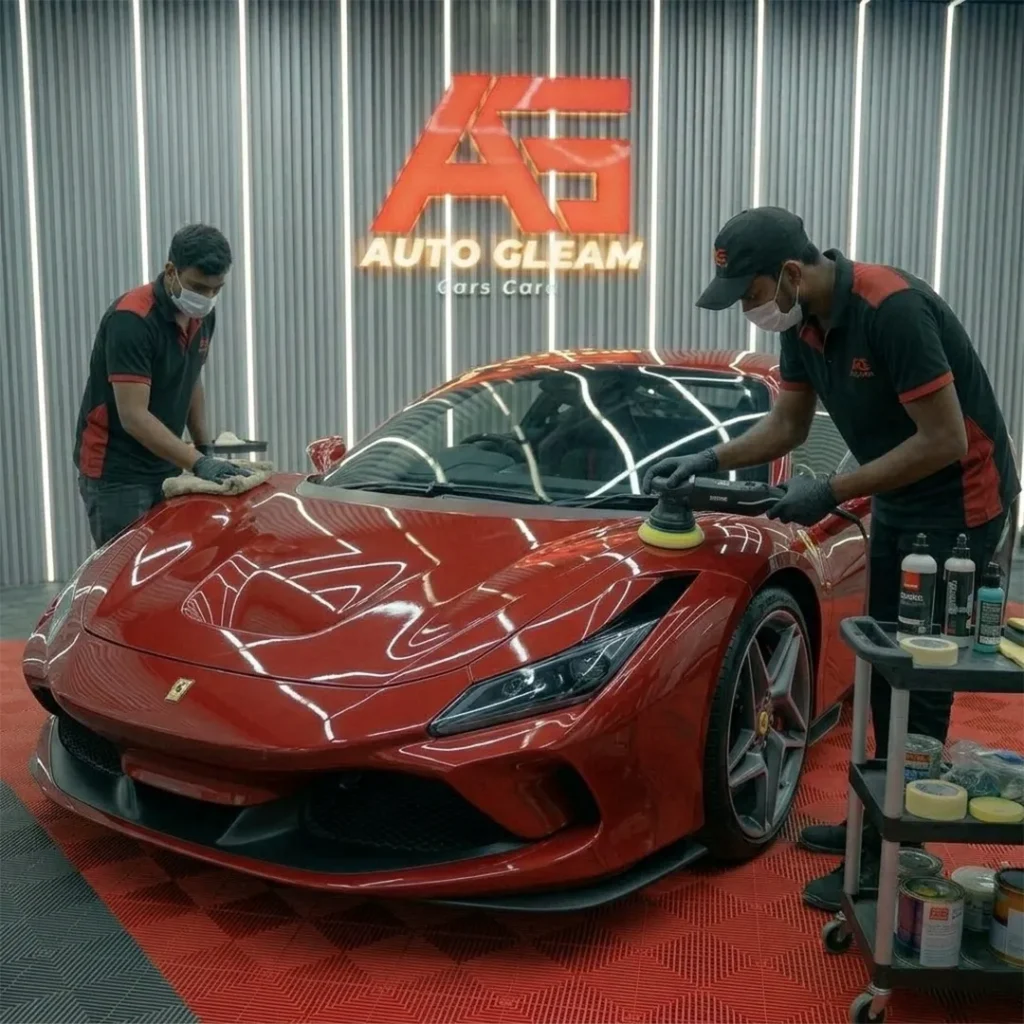
Our specialists use dual-action polishers with compound and finishing polish to restore a flawless finish.
Step 05
Protect & Deliver
A final wax or sealant coat locks in the shine. Your car is inspected and returned gleaming.
Car Polishing in Al Quoz, Dubai — Restore Your Paint to the Gloss It Had on Day One
Paint doesn’t stay perfect on its own. In Dubai especially, it doesn’t even stay decent without intervention. Between the fine sand that acts like mild sandpaper on your clear coat every time you drive, the automated car washes that leave swirl marks across every panel, and months of UV exposure that flatten the gloss and start oxidizing the surface — most cars in Dubai have paint that looks considerably worse than it should within two or three years of ownership. Car polishing in Al Quoz at Auto Gleam Cars Care LLC is how you fix that properly.
We’ve been doing professional paint correction and car polishing in Dubai for over 10 years. Our team uses Rupes dual-action and rotary polishers, Koch-Chemie compounds and finishing polishes, and a systematic approach to paint correction that removes the actual defects rather than just temporarily filling them with wax. The result is clear coat that’s genuinely corrected — not masked, not hidden, corrected.
What Car Polishing Actually Does to Your Paint
There’s a widespread misunderstanding about what polishing does. Many people think it adds something to the paint surface — a product that makes it shine. It doesn’t. Polishing removes a microscopic layer of clear coat to level the surface, eliminating the scratches, swirl marks, and oxidation that live at a depth the clear coat can recover from without compromising paint protection.
Think of it this way: your car’s clear coat is typically between 40 and 80 microns thick on a modern vehicle. A swirl mark or a fine scratch lives in the top few microns of that layer. A correctly performed polish removes just enough clear coat to get below the depth of those defects and re-establish a flat, reflective surface. Done right, the paint looks better and the clear coat remains intact. Done wrong — with too much heat, the wrong compound, or excessive passes — you thin the clear coat prematurely and create problems that can’t be polished out again.
This is why machine polishing skill matters, and why the technician doing the work matters more than the machine they’re holding.
Signs Your Car Needs Professional Polishing in Dubai
Most cars in Dubai need polishing well before their owners realize it. The signs are there if you know where to look.
Swirl Marks Across the Paint Surface
Swirl marks are fine circular scratches that become visible when light hits the paint at certain angles — particularly direct sunlight and artificial lighting at night. They’re most obvious on dark-coloured cars but present on every vehicle that’s been through an automatic car wash more than a handful of times. Automatic wash brushes and rollers create swirl patterns in the clear coat consistently. Hand washing done with contaminated equipment or wrong technique does the same thing. Once you see them, you can’t unsee them — and polishing is the only real fix.
Fine Scratches From Daily Use
Key scratches, brush marks from tight parking spots, light contact with clothing zips and buckles as people walk past — Dubai’s urban environment creates surface-level paint scratches constantly. Whether they’re polishable or require touch-up paint or a respray depends entirely on how deep they go. A scratch you can feel with your fingernail has probably broken through the clear coat into the base coat and needs a different approach. A scratch that looks white or silver but you can’t feel with your nail is usually in the clear coat and responds to polishing. We assess every scratch before committing to a method.
Oxidized, Dull, or Flat-Looking Paint
Paint oxidation is what happens to unprotected or poorly maintained paint under UV exposure over time. The clear coat loses its gloss, takes on a milky or chalky appearance, and the colour underneath looks flat rather than deep and reflective. In Dubai’s UV environment, this process happens faster than in most countries. Light to moderate oxidation responds well to cutting compounds and polishing — the damaged surface is removed to expose the clearer coat beneath. Severe oxidation that has progressed through the clear coat into the base coat is beyond polishing and needs a respray, but we see very few cars where it’s got to that point if the owner is paying attention.
Water Spot Etching on Panel Surfaces
Water spots in Dubai aren’t just the mineral deposits from hard water that wipe off — they’re etched water spots where the mineral ring has actually bonded into the clear coat surface and can’t be removed by washing or wiping. These appear as circular marks that remain after washing and look like they’ve been pressed into the paint surface rather than sitting on top of it. They’re particularly common on bonnets, roofs, and horizontal surfaces where water sits and evaporates in the heat. Polishing removes the etched surface layer and eliminates the marks.
Paint That Looks Clean But Lacks Depth and Gloss
Some cars come to us with paint that looks acceptable in photographs but lacks the depth and mirror-like reflection that well-maintained paint should have. This is often a surface contamination and micro-marring issue rather than deep defects — the accumulated effect of minor scratches and environmental deposits over time. A single-stage polish with a finishing compound can transform this type of paint without any aggressive correction, and the difference in appearance is significant even when the starting condition looks passable.
Our Car Polishing Process at Auto Gleam Al Quoz
Paint correction is a multi-stage process when done properly. Here’s how we approach every polishing job at our Al Quoz workshop.
Stage 1 — Paint Decontamination Before Polishing Begins
You cannot polish properly on a contaminated surface. Before any machine touches the paint, we wash the vehicle thoroughly, then go through a decontamination process that removes bonded iron particles using a dedicated iron fallout remover, followed by clay bar treatment to pull embedded contamination — brake dust, industrial fallout, and road grime — out of the clear coat surface. This stage alone changes the paint texture noticeably. It’s also essential because polishing over bonded contamination drives it deeper into the clear coat rather than removing it.
Stage 2 — Paint Thickness Measurement
We measure paint thickness across all panels using a digital paint depth gauge before beginning any correction work. This tells us the actual usable clear coat thickness on each panel — which matters because some panels on used cars have been resprayed and may have less clear coat than factory panels. Knowing the thickness guides how aggressive we can be with the correction process. It also tells us if any panel has been polished too many times before and needs a different approach. This step protects your car from overcorrection.
Stage 3 — Test Spot Assessment
Before committing to a compound and pad combination across the full vehicle, we do a test spot on an inconspicuous panel — usually the door or a lower section of the bonnet — to confirm how the paint responds to the planned approach. Different paint hardnesses respond differently to the same compound and pad combination. Japanese car paint tends to be softer and needs less aggressive products. German and European car paint is typically harder and requires more working to correct. Soft paint polished with too aggressive a combination creates holograms that require additional finishing passes to remove. The test spot eliminates this risk before it becomes a problem across the whole car.
Stage 4 — Correction Polishing With Rupes Machines
We use Rupes BigFoot dual-action and rotary polishers for correction work, depending on what the paint requires. Dual-action machines are safer for less severe defects and softer paints because they generate less heat and have lower cut rates. Rotary polishers cut more aggressively and are used where significant defect removal is needed — deep swirl marks, heavier scratches, oxidized surfaces — but require more experienced hands to avoid burning the paint at edges and high points. Koch-Chemie compounds are paired to the defect level: Heavy Cut for significant correction, Medium Cut where moderate work is needed, and Fine Cut where the paint needs refinement rather than correction.
Stage 5 — Finishing and Inspection Under Specialist Lighting
After correction polishing, every panel is inspected under a Scangrip sun simulation light — a high-intensity LED lamp that reveals any remaining defects, holograms, or polish residue that normal workshop lighting misses. If any panel needs a finishing pass with a lighter polish and soft foam pad to remove polishing holograms or bring the gloss to its peak, it’s done at this stage. Only once every panel passes inspection under proper lighting does the polishing process finish.
Stage 6 — Protection Applied After Polishing
Freshly polished paint is paint at its most vulnerable — the surface is open and unprotected. We recommend applying protection immediately after polishing. The most durable option is ceramic coating in Dubai, which bonds to the freshly corrected clear coat and provides years of UV protection, hydrophobic performance, and surface hardness. A quality spray wax or paint sealant is a shorter-term alternative if ceramic coating isn’t in the plan. Either way, polished paint without protection in Dubai’s UV environment will begin to degrade again faster than protected paint — it’s worth doing both at the same visit.
Single-Stage Polish Versus Multi-Stage Paint Correction
Not every car needs the same level of polishing work. Understanding the difference helps you know what your car actually requires.
Single-Stage Polish — Enhancement and Light Correction
A single-stage polish uses one compound-and-pad combination to both remove light surface defects and refine the finish in the same pass. It’s appropriate for cars with mild swirl marks and light surface imperfections where significant correction isn’t required — newer cars with minor wash-induced swirling, vehicles with well-maintained paint that needs a refresh, or cars being prepared for ceramic coating or PPF where the paint is already in reasonably good condition. The result is cleaner, glossier paint without the time and cost of a full multi-stage correction.
Two-Stage Paint Correction — Cut and Finish
Two-stage correction uses an aggressive cutting compound first to remove significant defects, followed by a finishing polish to refine the surface and bring the gloss to its maximum. This is the most common correction approach for cars with moderate swirl marks, light scratches, and some oxidation — which covers the majority of daily-driven vehicles in Dubai that have been through automatic car washes and haven’t been professionally polished before. The cut stage removes the defects; the finish stage makes the result look right.
Three-Stage Paint Correction — Full Defect Elimination
Three-stage correction adds a heavy-cutting compound stage before the standard two-stage process, used for cars with severe swirl marks, deeper scratches, significant oxidation, or paint that hasn’t been corrected in years. This is the most comprehensive polishing approach and typically achieves 80 to 95 percent defect removal across all panels — the upper limit is determined by the depth of individual defects relative to the available clear coat thickness. Three-stage correction is what detail-oriented car enthusiasts request when they want the paint to perform at its best before coating or PPF installation.
Car Polishing for Every Vehicle Type in Dubai
Luxury and Exotic Car Paint Correction
Polishing a Ferrari, Lamborghini, Porsche, Rolls-Royce, or Bentley requires specific knowledge of how each manufacturer’s paint system behaves under a machine. Porsche’s harder paint needs more working than softer Japanese paint. Rolls-Royce’s deep pigmented paint requires finishing to a specific standard that shows every microdefect under light. McLaren’s softer clear coat is easily damaged by over-aggressive correction. We’ve corrected paint on all of these vehicle types over 10 years in Al Quoz, and we approach each one with the specific technique it requires rather than a generic polishing process.
German and European Car Polishing
Mercedes-Benz, BMW, Audi, and Volkswagen Group vehicles typically have harder clear coat formulations that are more resistant to fine scratches but also require more effort to correct when defects are present. They respond particularly well to two and three-stage correction — the harder clear coat polishes to a very deep, reflective finish when done correctly. These vehicles are among the most satisfying to correct because the paint quality is high enough that proper polishing reveals a level of gloss that makes the car look genuinely different.
Japanese Car Paint Correction
Toyota, Lexus, Nissan, Honda, and Mazda vehicles tend to have softer clear coat than European counterparts. Softer paint scratches more easily — which is why Japanese cars often show more swirl marks from the same number of car washes — but also corrects more easily with less aggressive products. The risk is going too aggressive and introducing holograms or buffer trails, which is why the test spot stage matters particularly with Japanese paint. Done correctly, Japanese car paint corrects beautifully and takes ceramic coating exceptionally well.
White and Light-Coloured Cars
White is the most popular car colour in Dubai, and many owners assume white paint doesn’t show swirl marks. It does — they show as grey circular patterns in direct sunlight and under certain artificial lighting. White paint also oxidizes visibly, developing a chalky flat surface over time. Polishing white paint to a clean, bright, glossy finish makes a bigger visual difference than many owners expect before they see the result.
Dark-Coloured Cars — Black, Dark Blue, Graphite
Dark cars show every defect. Every swirl mark, every fine scratch, every water spot is visible under normal lighting conditions on black and dark grey paint. They’re the most demanding to polish correctly because the finish standard required is higher — any remaining defects or holograms after correction are immediately visible. Our technicians spend more time on inspection and finishing passes on dark cars for exactly this reason, and we don’t consider a dark car done until it passes light inspection without question.
Why Competitor Car Washes Can’t Match Professional Polishing
Dubai has hundreds of car wash centers. Most of them offer “polishing” on their service menu. Most of what’s sold as polishing at a car wash center is a wax or glaze applied by hand or orbital buffer that temporarily fills and hides surface scratches rather than removing them. It looks better for a few weeks, then the filler wears away and the defects reappear — often worse than before because the surface was worked without proper preparation.
Real paint correction uses specific compounds matched to specific defect levels, professional-grade machines operated by trained technicians who understand paint depth and heat management, proper lighting for inspection, and a systematic approach from decontamination through protection. It produces results that last because the defects are physically removed, not covered. After 10 years of correcting paint on Dubai’s cars, the difference is obvious to us — and it becomes obvious to our customers the first time they see their car under proper lighting after a real correction.
Car Polishing as Part of a Complete Car Care Plan
Polishing works best as part of a broader approach to paint care rather than as an isolated fix. Most customers who come for paint correction end up booking additional services that protect what the polishing achieves.
Our ceramic coating service in Dubai is the natural partner for paint correction — coating applied over freshly corrected clear coat bonds optimally and delivers the best possible durability and hydrophobic performance. For physical paint protection against chips and scratches, our PPF installation in Dubai is applied to the high-impact zones immediately after correction so the newly corrected paint is protected before Dubai’s roads get a chance to damage it again.
For cars that need a full interior and exterior overhaul, our professional car detailing service in Dubai combines interior deep cleaning with exterior paint correction in one comprehensive session. If the car also has bodywork damage — dents, panel scratches through to the base coat, bumper repairs — our car denting and painting service in Dubai addresses those before polishing begins, so the surface we’re correcting is already structurally sound.
For interiors that need attention alongside paint correction, our car interior cleaning service in Dubai runs concurrently in most cases — interior and exterior teams working simultaneously so both are completed the same day. Damaged alloys that detract from freshly polished paint are addressed through our wheel rim refurbishment service in Dubai. For minor dents on the body panels that need correcting before a polish, our paintless dent removal service in Dubai handles those without touching the factory paint. And if the car’s appearance is being refreshed with a colour change alongside paint correction, our car wrapping service or window tinting in Dubai can be booked in the same visit.
How to Book Car Polishing at Auto Gleam in Al Quoz
The best way to book is to WhatsApp us at +971 50 461 7607 with your vehicle make, model, colour, and a brief description of the paint’s condition. If you can send a couple of photos in direct sunlight — one from the front, one from the side — that gives us the clearest picture of what the paint needs and how long the job will take. We’ll respond with a booking slot and a clear plan for the work.
We’re open Monday to Friday 8:00 AM to 6:00 PM and Sunday 8:00 AM to 2:00 PM. Our workshop is in Al Quoz Industrial Area 04 with free on-site parking. Customers come to us from across Dubai — Jumeirah, Business Bay, Downtown, Dubai Marina, JLT, Palm Jumeirah, Mirdif, Deira, and further afield from Sharjah and Abu Dhabi.
Frequently Asked Questions — Car Polishing Al Quoz Dubai
What is car polishing and what does it do to the paint?
Car polishing is a paint correction process that uses abrasive compounds and machine polishers to remove a microscopic layer of clear coat, eliminating swirl marks, fine scratches, oxidation, and water spot etching that live within the surface. The result is a leveled, reflective clear coat that shows deep gloss and clarity. Polishing removes defects — it doesn’t fill or hide them the way wax or glaze products do.
How is professional car polishing different from a car wash “polish”?
A car wash “polish” is typically a wax or glaze applied by hand or basic orbital buffer that temporarily fills scratches with oils and silicones. It looks better for a few weeks before wearing off. Professional polishing uses calibrated abrasive compounds, professional-grade machines, and trained technicians who measure paint thickness, perform test spots, and inspect the result under specialist lighting. The defects are physically removed rather than temporarily concealed — the result lasts because the surface has actually changed.
How long does car polishing take in Dubai?
A single-stage enhancement polish on a compact car in good condition takes approximately 4 to 5 hours. A two-stage correction on a medium-size vehicle with moderate swirl marks and surface defects takes 6 to 8 hours. A full three-stage correction on a large or heavily defected vehicle can take 8 to 12 hours and may span two days for very thorough work. We give you an accurate time estimate when you send us photos of the paint before booking.
Can car polishing remove deep scratches completely?
It depends on the scratch depth. Scratches that are within the clear coat — you can feel them slightly with a fingernail but they don’t show bare metal or primer — can typically be removed or significantly reduced by polishing. Scratches that penetrate through the clear coat into the base coat or primer cannot be polished out and require touch-up paint or a panel respray. We assess every scratch before starting and tell you honestly what polishing will and won’t fix on your specific car.
Will car polishing damage my paint or thin the clear coat?
Polishing done correctly by an experienced technician removes a very small, controlled amount of clear coat — typically 1 to 3 microns per correction stage on a clear coat that starts at 40 to 80 microns. Done incorrectly — too much heat, too aggressive a compound, or too many passes — it can thin the clear coat prematurely or burn the paint at edges. We measure paint thickness before starting and perform test spots to calibrate the process to your specific paint. This is why experience and proper process matter more than the machine.
How often should I get my car polished in Dubai?
For a car with ceramic coating or good paint protection, polishing every 2 to 3 years to address any accumulated defects is reasonable. For an unprotected car driven daily in Dubai with regular automatic car washes, the swirl marks accumulate faster — polishing once a year is not excessive for cars in this situation. The most practical approach is to polish, then immediately apply ceramic coating or a durable sealant so the correction is preserved for as long as possible before the next polish is needed.
What’s the difference between car polishing and car waxing?
Polishing is a correction process that physically removes defects from the clear coat using abrasive compounds. Waxing is a protection process that adds a sacrificial layer of natural wax to the paint surface to provide short-term gloss and weather protection. Wax does nothing to remove swirl marks or scratches — it temporarily fills them visually. The two are not alternatives; they are sequential steps. Polish first to correct defects, then protect the corrected surface with wax, sealant, or ceramic coating.
Can you polish a car that’s already been ceramic coated?
If the ceramic coating is still bonded and intact, you polish the coating itself rather than the clear coat beneath — the coating’s surface can develop light marring over time that reduces its gloss. If the coating has degraded significantly or needs to be replaced, it needs to be removed first before polishing the clear coat beneath and reapplying a fresh coating. We assess the condition of the existing coating before recommending the right approach for coated cars that come in for correction.
Is it worth polishing an older car in Dubai?
In most cases, yes — with realistic expectations about the result. Older paint that’s been neglected for years often responds very well to correction because the clear coat still has usable thickness. Cars from the 2000s and 2010s commonly have enough clear coat left for a meaningful correction even with significant surface defects. Where older cars sometimes present limitations is in areas where the clear coat has failed completely — peeling or flaking — which cannot be polished and needs a respray. We assess the paint condition honestly before taking on any older vehicle.
Do you use Rupes polishers at Auto Gleam?
Yes. We use Rupes BigFoot dual-action polishers and rotary machines for correction work, paired with Koch-Chemie cutting, medium, and finishing compounds. Rupes machines are the industry standard for professional paint correction — they maintain consistent speed under load, generate controllable heat, and produce results that cheaper machines can’t match. The combination of quality machine, quality compound, and a trained operator is what produces correction results that look right under all lighting conditions.
What’s the best time of year to get car polishing done in Dubai?
Polishing can be done year-round at our indoor workshop — we’re not affected by external temperature or direct sunlight. However, autumn and winter (October through March) are popular booking periods because customers want the car looking its best for cooler-weather driving and often pair polishing with ceramic coating before the summer. If you want to polish and then protect with ceramic coating before summer heat starts, booking between January and March gives the coating full time to cure properly before peak temperatures.
Can polishing fix paint that’s gone dull and chalky from Dubai sun?
Light to moderate oxidation — where the clear coat looks milky, flat, or chalky but hasn’t completely failed — typically responds very well to cutting compound and polishing. The damaged oxidized surface layer is removed to expose the cleaner, glossier clear coat beneath. Severe oxidation that has progressed all the way through the clear coat and started affecting the base coat is beyond polishing and needs a respray of the affected panels. We check paint condition under proper lighting before confirming what’s achievable.
Should I polish my car before applying PPF?
Yes, always. PPF locks in whatever the paint looks like at the time of application — including defects. Applying film over swirled or scratched paint means those defects are preserved under the film for the life of the protection. The correct sequence is: decontaminate the paint, polish to correct any defects, then install PPF over the corrected surface. This gives you both the cosmetic benefit of the correction and the physical protection of the film, and it’s the approach we use at Auto Gleam for every PPF installation on a vehicle that hasn’t been recently corrected.
Can you polish just one panel rather than the whole car?
Yes. Single-panel or partial polishing is common — a bonnet that’s heavily swirled while the rest of the car is in decent condition, or a roof that’s picked up water spot etching from parking. We match the correction level to what each panel needs rather than applying the same process to every panel regardless. The only consideration is that polishing one panel to a significantly higher level than adjacent panels may create a noticeable contrast — we assess this before starting and tell you if panel blending is needed for the result to look uniform.
What should I do after getting my car polished to maintain the result?
Apply a protective layer immediately — ceramic coating for long-term protection, or a quality synthetic sealant as a shorter-term alternative. After that, wash the car using the two-bucket hand wash method rather than automatic car washes, which are the primary cause of swirl marks in the first place. Use a clean, plush microfiber wash mitt and rinse it frequently. Dry with a clean microfiber towel rather than chamois or squeegee. These habits, combined with regular professional maintenance, are what keep polished paint looking correct for years rather than weeks.
Do you offer paint protection after polishing at Auto Gleam?
Yes. We strongly recommend applying protection immediately after polishing while the clear coat is in its best condition and fully open for bonding. We offer ceramic coating from 1-year to 7-year durability grades, spray sealants for shorter-term protection, and PPF for physical chip and scratch protection. Many customers book a polish and ceramic coating package as a single job — the polish runs in the morning, the coating is applied in the afternoon once the panels are confirmed clean and defect-free under light inspection. Contact us on WhatsApp to discuss which protection option suits your vehicle and usage pattern.
How do swirl marks form on car paint in Dubai?
Swirl marks form when abrasive particles are dragged across the paint surface — most commonly by automatic car wash brushes and rollers that trap dirt and drag it across the clear coat in circular patterns, dirty wash mitts or cloths, improper drying with chamois or rough towels, and wiping dust off a dry car with anything other than a proper microfiber. In Dubai, automatic car washes are everywhere and convenient — but regular use without periodic professional correction is the fastest way to build up visible swirl damage across your paint.
Can I get a quote for car polishing before bringing my car in?
The most accurate way to understand what’s involved and how long the job will take is to send us a WhatsApp message with your vehicle details and photos of the paint in direct sunlight. Photos let us see the level of swirl marks, scratches, and oxidation — which determines whether single-stage, two-stage, or three-stage correction is appropriate. From there we give you a clear picture of the process and timing before you commit to bringing the car in. WhatsApp us at +971 50 461 7607 to get started.
Does car colour affect how difficult or noticeable the polishing result is?
Colour affects both defect visibility and the finishing standard required. Dark colours — black, dark grey, dark blue, dark green — show every defect and require the most thorough finishing because any remaining hologram or swirl is immediately obvious under light. Light colours — white, silver, light grey — are more forgiving under normal lighting but still show swirls in direct sunlight. Red and yellow cars sit in between and often have slightly softer clear coats than equivalent dark colours. We adjust our approach and finishing thoroughness based on the colour and the inspection standard each colour demands.
Is car polishing available for classic and vintage cars in Dubai?
Yes, but with careful assessment first. Classic car paint is often original single-stage paint without the separate clear coat layer that modern vehicles have — the paint itself is the final surface, which means polishing directly affects the colour and depth in a more direct way than on modern cars. Original old paint also typically has significantly less usable thickness than modern clear coats. We assess classic car paint individually and use very gentle compounds and processes appropriate for the specific paint system. Preserving original paint is the priority — aggressive correction on a classic is the wrong approach.
OUR testimonials.
Complete car care under one roof — from a deep clean to full paint transformation.
★★★★★
Ahmed Raza
Verified Buyer
"I tried their mobile detailing service while at work in Downtown Dubai. The team was punctual and highly professional. My car looks like it just rolled out of the showroom."
★★★★★
Sarah Lawson
Verified Buyer
"Took my SUV to their Al Quoz center for a full PPF and ceramic coating. The attention to detail is insane, and the finish is flawless. Easily the best auto care in Dubai."
★★★★★
Omar Khalid
Verified Buyer
"My car had noticeable swirl marks. AutoGleam’s paint correction service worked absolute magic. The specialists are knowledgeable and transparent. Highly recommended."
★★★★★
Michael Davis
Verified Buyer
"Outstanding paintless dent removal. I had a door ding that bothered me for months. They removed it perfectly within an hour. Professional and very reasonably priced."
★★★★★
Ahmed Raza
Verified Buyer
"I tried their mobile detailing service while at work in Downtown Dubai. The team was punctual and highly professional. My car looks like it just rolled out of the showroom."
★★★★★
Sarah Lawson
Verified Buyer
"Took my SUV to their Al Quoz center for a full PPF and ceramic coating. The attention to detail is insane, and the finish is flawless. Easily the best auto care in Dubai."
★★★★★
Omar Khalid
Verified Buyer
"My car had noticeable swirl marks. AutoGleam’s paint correction service worked absolute magic. The specialists are knowledgeable and transparent. Highly recommended."
★★★★★
Michael Davis
Verified Buyer
"Outstanding paintless dent removal. I had a door ding that bothered me for months. They removed it perfectly within an hour. Professional and very reasonably priced."
★★★★★
Tariq Mehmood
Verified Buyer
"My car's interior needed a serious deep clean, and AutoGleam delivered! The steam cleaning removed stains I thought were permanent. The whole car smells fresh."
★★★★★
Fahad Ali
Verified Buyer
"Incredible service! The denting and painting work was seamless, and the color match was perfect. Highly recommended for anyone looking for reliable premium car care."
★★★★★
Zain Bukhari
Verified Buyer
"Their window tinting service is excellent. It keeps my car significantly cooler in the Dubai heat. Fast, professional, and they use top quality materials."
★★★★★
Hassan Sheikh
Verified Buyer
"Superb customer service. They picked up my car, did a full deep clean and polish, and dropped it back. It literally looks brand new. I am very impressed."
★★★★★
Tariq Mehmood
Verified Buyer
"My car's interior needed a serious deep clean, and AutoGleam delivered! The steam cleaning removed stains I thought were permanent. The whole car smells fresh."
★★★★★
Fahad Ali
Verified Buyer
"Incredible service! The denting and painting work was seamless, and the color match was perfect. Highly recommended for anyone looking for reliable premium car care."
★★★★★
Zain Bukhari
Verified Buyer
"Their window tinting service is excellent. It keeps my car significantly cooler in the Dubai heat. Fast, professional, and they use top quality materials."
★★★★★
Hassan Sheikh
Verified Buyer
"Superb customer service. They picked up my car, did a full deep clean and polish, and dropped it back. It literally looks brand new. I am very impressed."