ppf Installation.
Dubai's Premium Auto Care
Where Perfection
Meets Drive.
Expert car detailing, ceramic coating, PPF, and paint correction for daily drivers, luxury vehicles, and everything in between — at our Al Quoz studio or your doorstep.
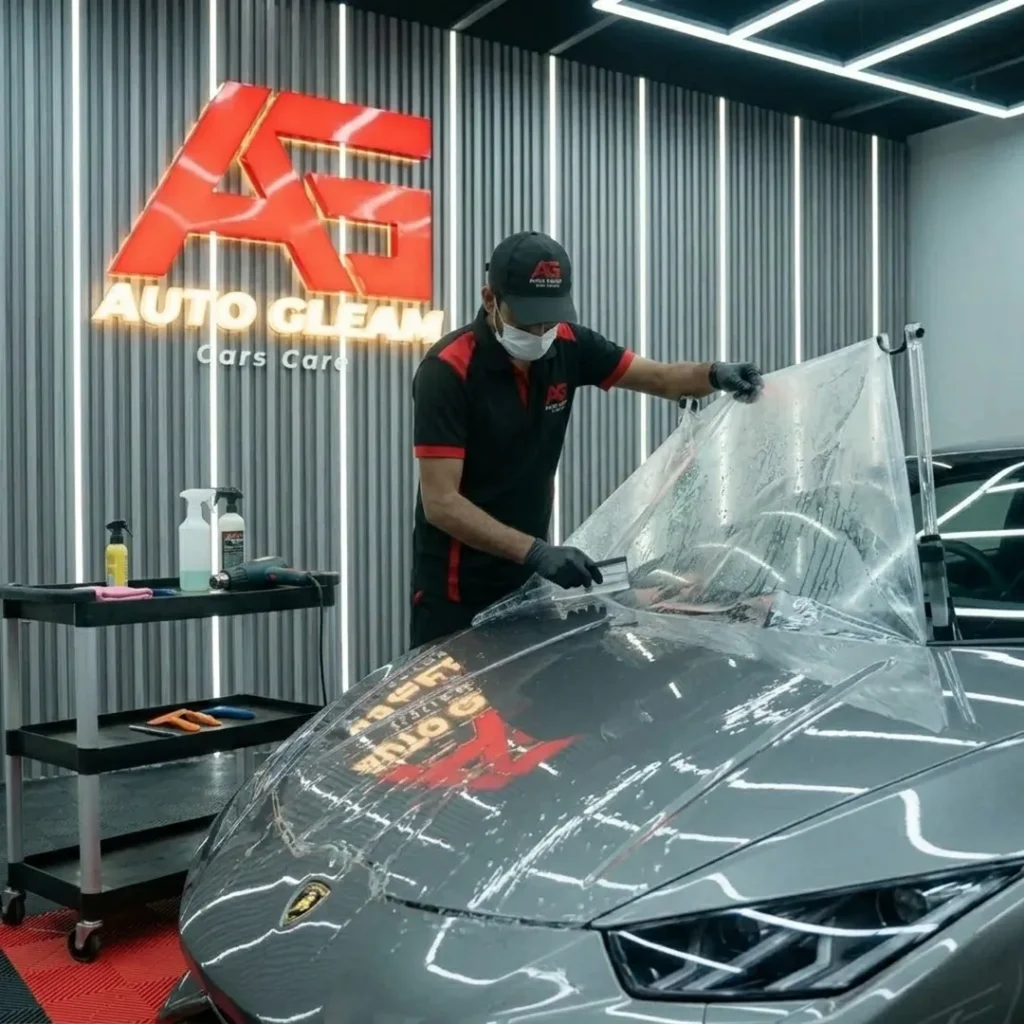
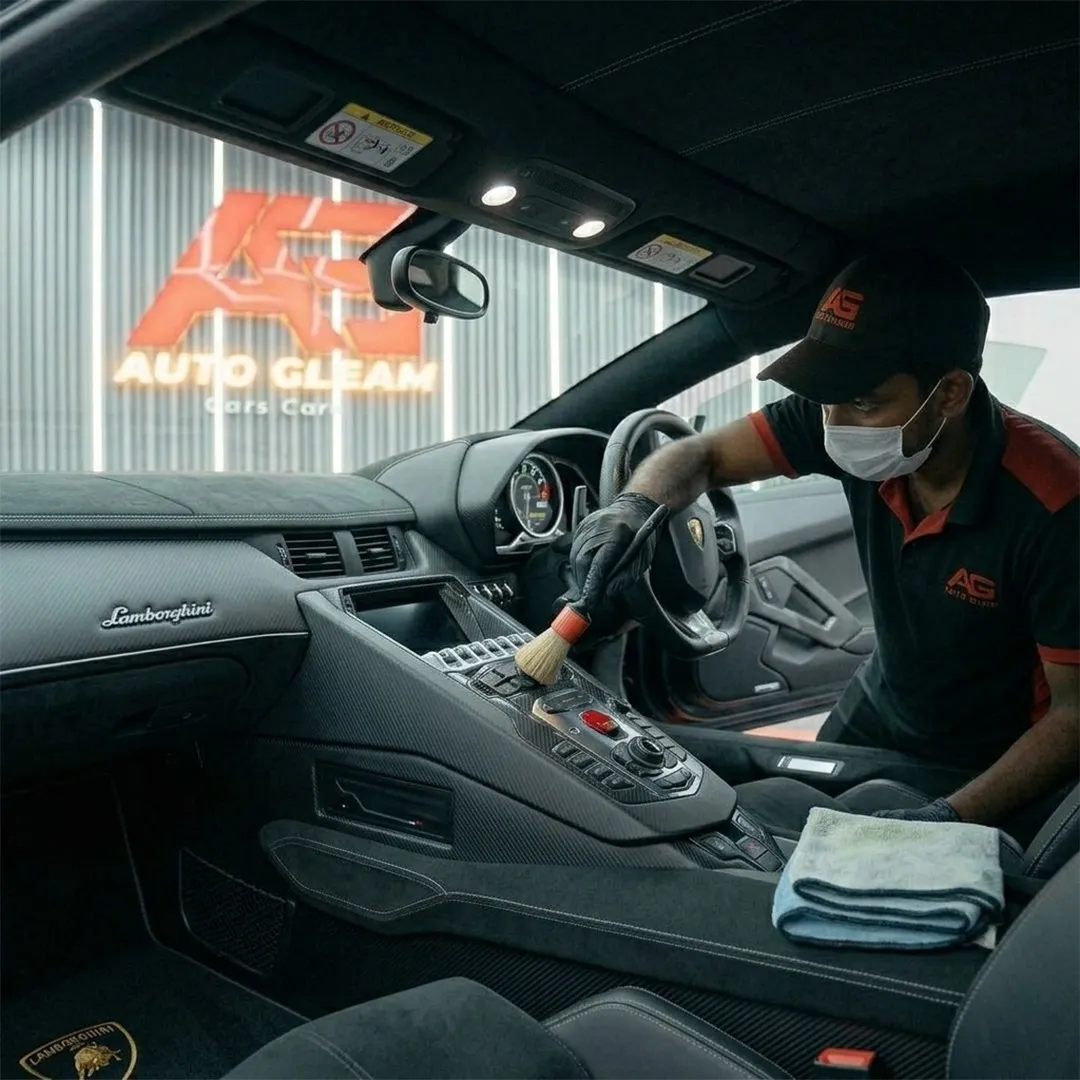
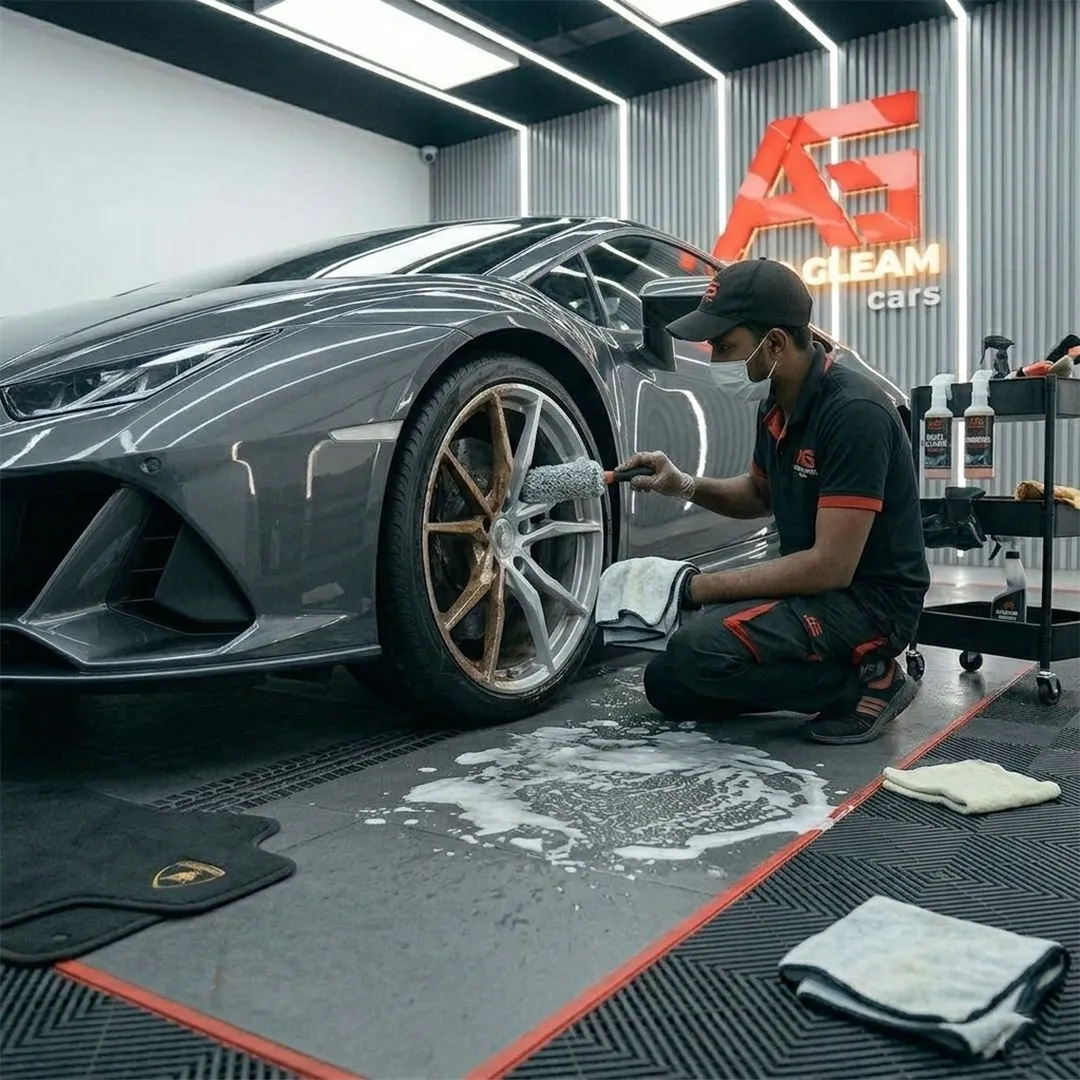
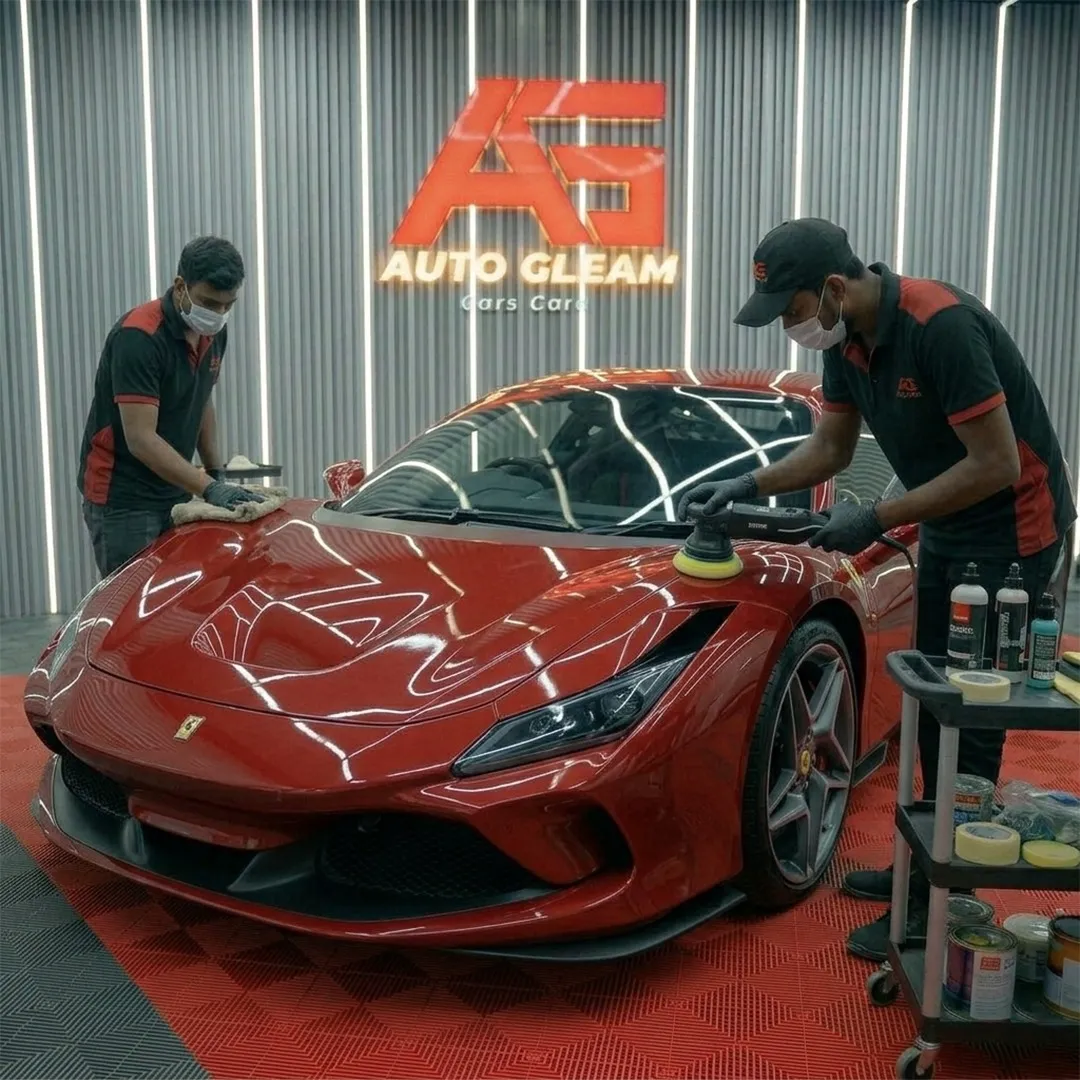
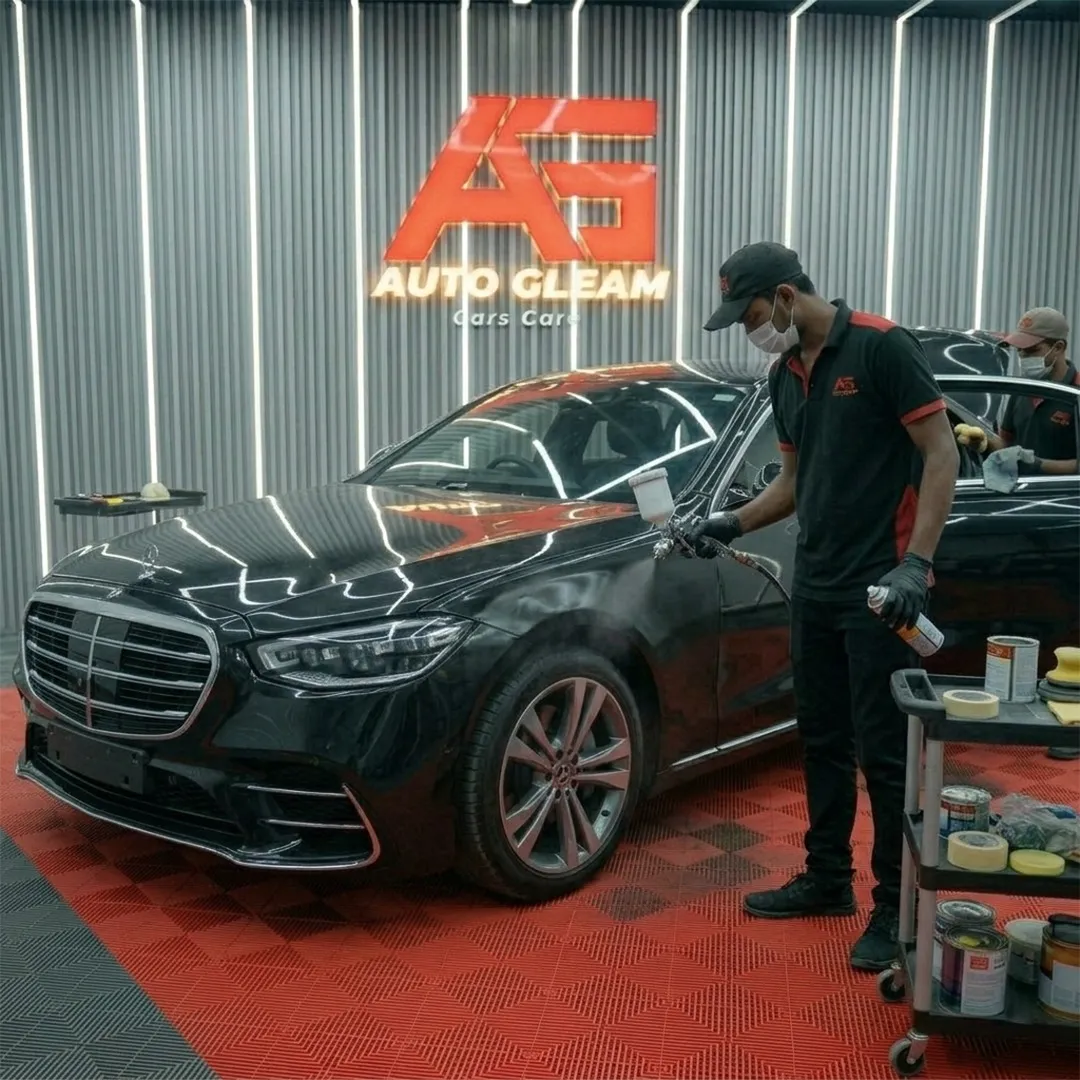
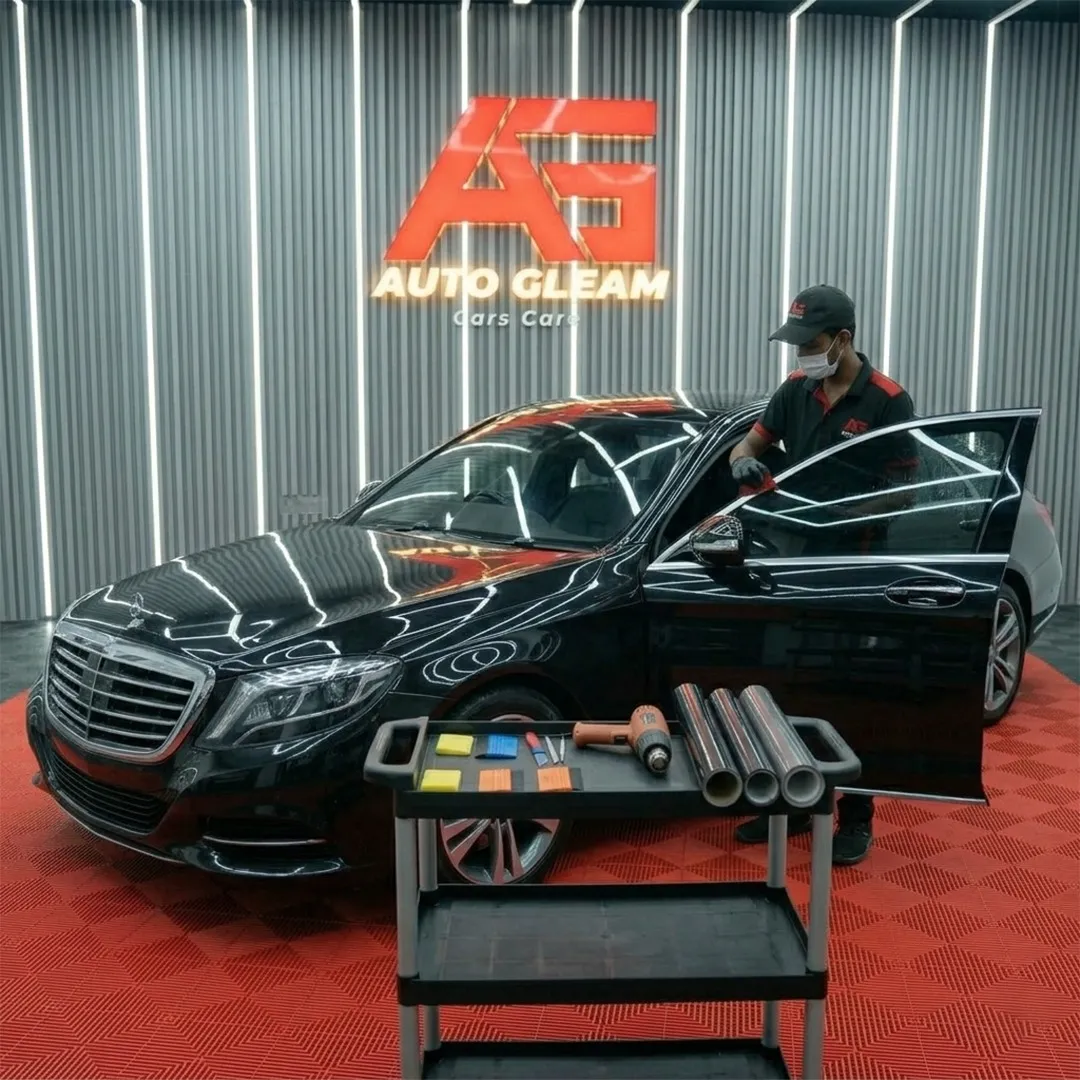
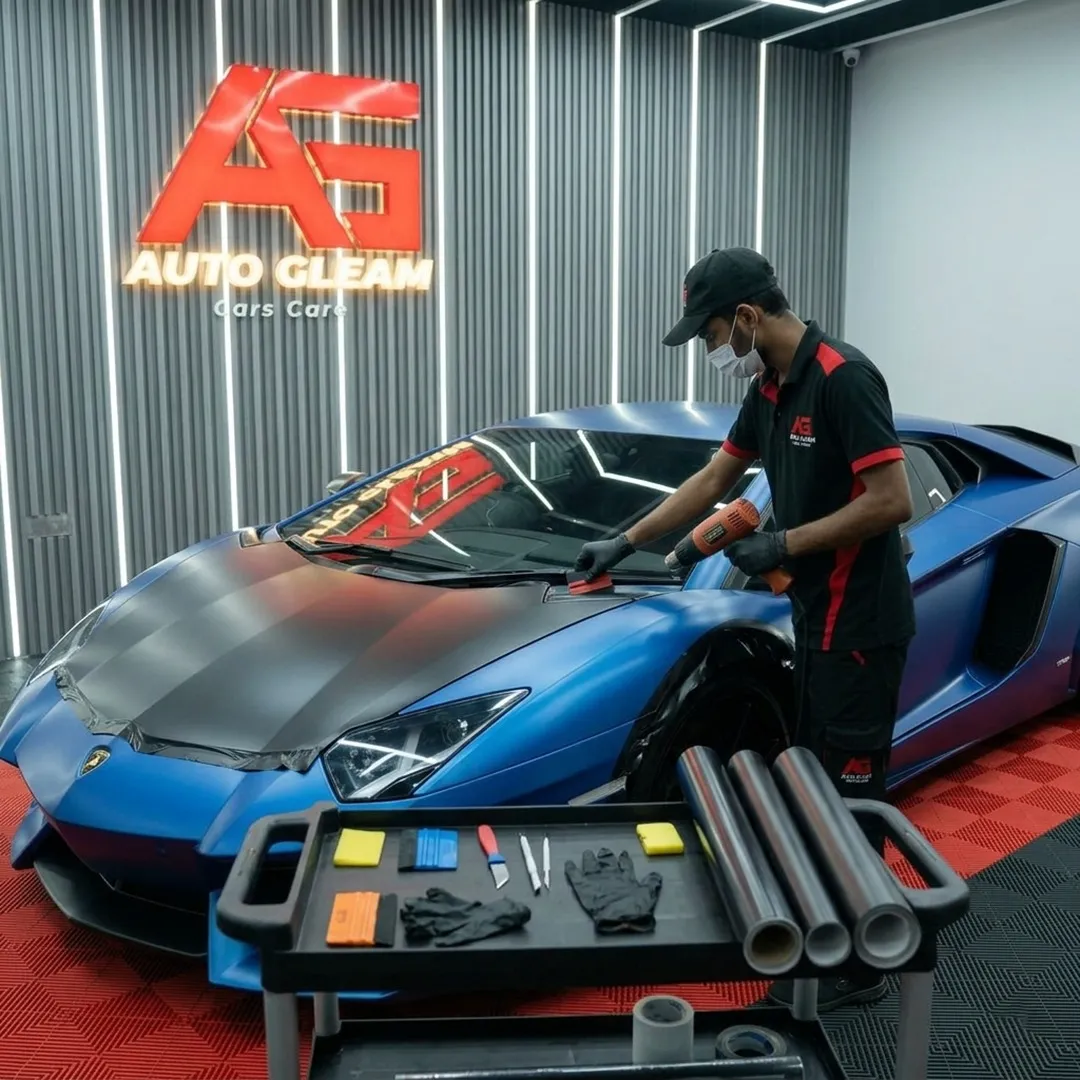
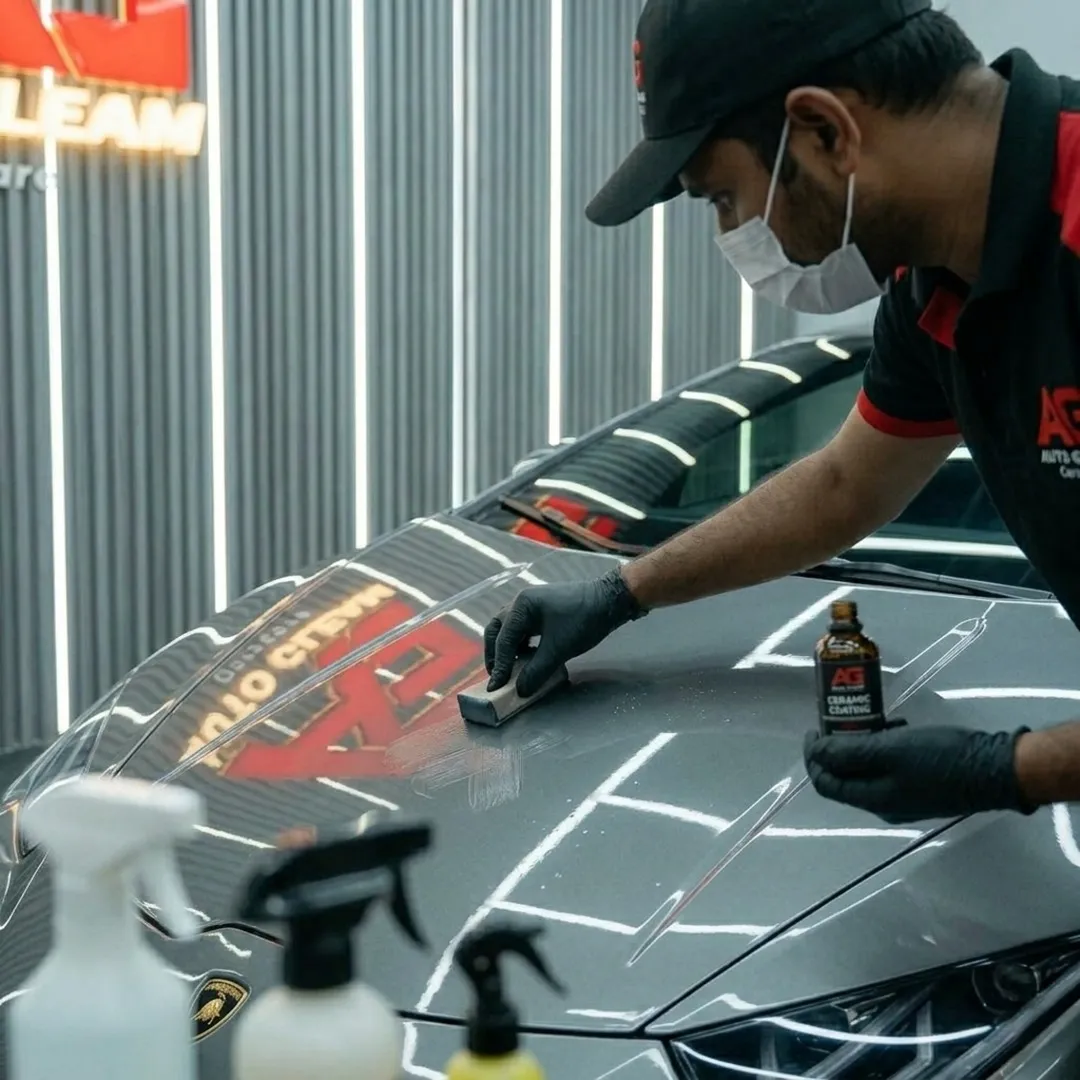
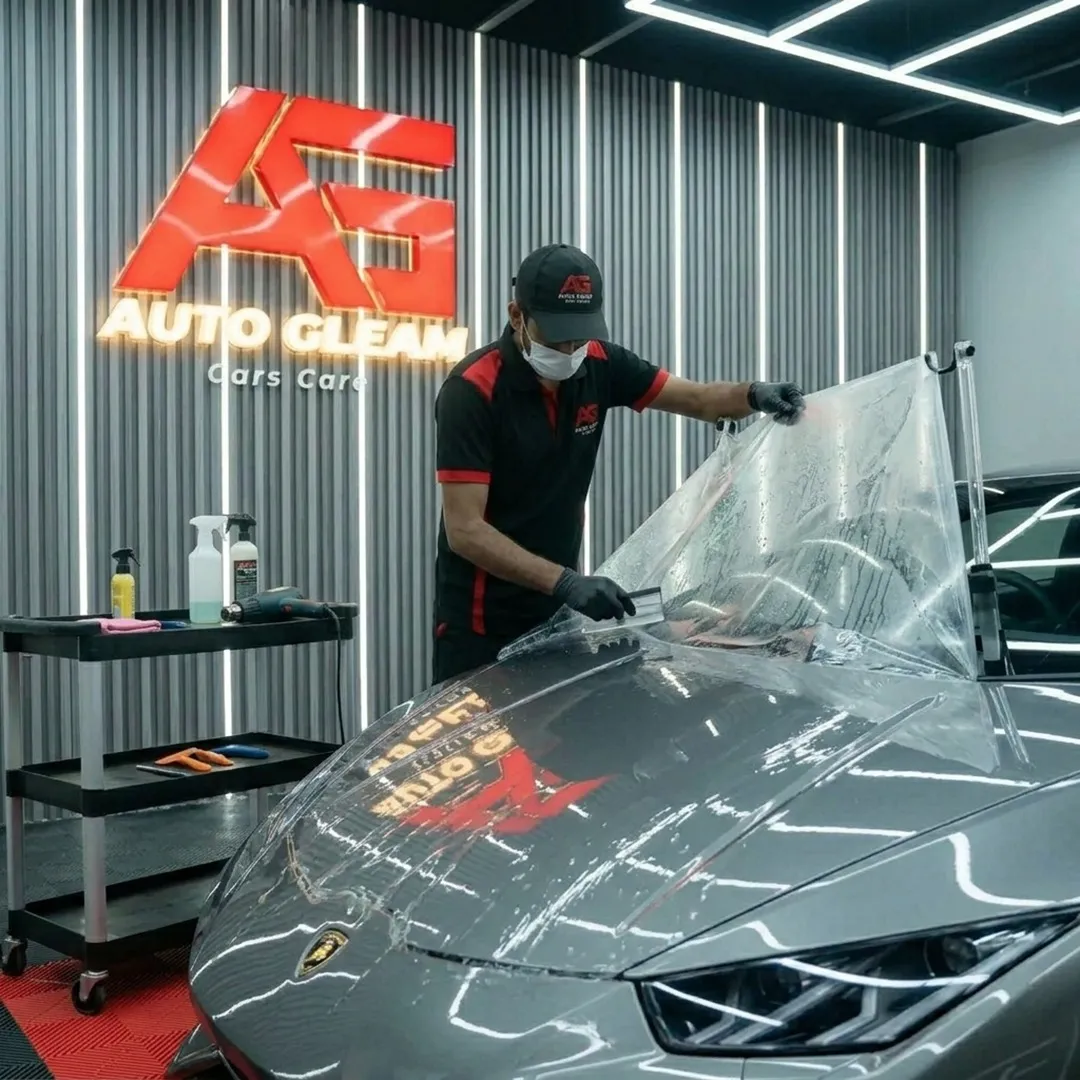
How We Install PPF
Our PPF Process
Step 01
Book Appointment
Call or WhatsApp us to schedule your visit. We confirm a time that works for you.
Step 02
Paint Inspection
We measure paint thickness and inspect every panel to identify defects that must be corrected before film is applied.
Step 03
Surface Preparation
Full foam wash, clay bar decontamination and IPA panel wipe-down ensures the film bonds with zero lifting or bubbles.
Step 04
Film Cut & Apply
Computer-plotted PPF is precision-cut for your exact model, then applied panel by panel with a slip solution for a perfect, invisible fit.
Step 05
Seal & Deliver
All edges are heat-sealed for a seamless finish. After curing, your car leaves with invisible, long-term paint protection.
PPF Installation in Al Qouz, Dubai | AutoGleam Car Care LLC
Paint Protection Film is one of the most effective things you can do for your car’s paint in Dubai — and one of the most technique-dependent services in the auto care industry. A well-installed PPF is invisible, self-healing, and keeps your car looking factory-new for up to 10 years. A poorly installed film peels at the edges, yellows in the UAE sun, and costs more to remove than it cost to install. At AutoGleam Car Care LLC, our PPF installation in Al Qouz is done by experienced technicians who have been working with paint protection films in Dubai’s specific climate conditions for over a decade.
We work with premium film brands, install in a climate-controlled bay that keeps dust and contamination off the paint during application, and take the time to prepare each vehicle’s paint correctly before the film goes on. If the paint underneath is not clean and corrected before installation, no film — regardless of its brand — will bond or perform properly. This preparation step is where many installers cut corners. We do not.
Whether you need a front protection package, partial PPF on high-impact zones, or full body coverage, we handle it at our Al Qouz workshop. Message us on WhatsApp for a free consultation on the right coverage for your vehicle.
Why Al Qouz Is the Right Location for PPF Installation in Dubai
Al Qouz Industrial Area is where Dubai’s serious automotive work happens. The infrastructure — covered workshops, professional equipment, climate-controlled environments — exists here at a density you do not find in retail-facing areas of the city. For PPF installation specifically, the workshop environment is not just a preference; it is essential.
PPF application requires the paint to be free from dust and airborne particles during installation. Even a single dust particle under the film creates a visible imperfection. Installing film in open air, in a petrol station forecourt, or in an outdoor environment in Dubai — where the air is always carrying fine sand particles — is guaranteed to produce an imperfect result. Our climate-controlled indoor bay eliminates this variable. This is the primary reason that professional PPF installers in Dubai cluster in Al Qouz: the facilities here support the conditions the work demands.
Our workshop is accessible from Sheikh Zayed Road and Al Khail Road, putting us within easy reach of customers across the entire city.
What Is Paint Protection Film and How Does It Work?
The Technology Behind PPF — From Military to Mainstream
Paint Protection Film (PPF) was originally developed in the 1960s for US military use — specifically to protect helicopter rotor blades from sand, gravel, and debris during low-altitude missions in Vietnam. The technology was adapted for motorsport in the 1980s and began reaching mainstream automotive applications in the 1990s. Today’s PPF products are thermoplastic polyurethane films engineered specifically for automotive paint surfaces — far more sophisticated than the early military materials.
Modern PPF is a multi-layer construction. The base adhesive layer bonds to the vehicle’s paint. The polyurethane body layer provides the physical protection — absorbing impacts from stone chips, sand, and road debris that would otherwise mark the paint. The top clear coat layer provides the self-healing function, UV resistance, and surface properties that make the film perform in real-world conditions. The total thickness of quality PPF films is typically 6–8 thousandths of an inch (0.15–0.20mm) — enough to absorb meaningful impact while remaining flexible enough to conform to body curves.
Self-Healing Properties — How PPF Repairs Itself
The most impressive feature of modern PPF is its self-healing top coat. This is a polymer that, when disturbed by a fine scratch or swirl mark, flows back to its natural level when heat is applied. In Dubai’s climate, this happens passively — parking your car in the sun for 15–30 minutes is typically enough to heal minor surface scratches on the film. For deeper marks, pouring warm water over the affected area accelerates the process. This is why scratches that would permanently mark unprotected paint simply disappear from a quality PPF film over time.
The self-healing property is not unlimited — it applies to scratches within the film’s clear coat. A scratch that penetrates through the entire film into the paint beneath will not heal. But the film itself is sacrificed in absorbing the damage, protecting the paint underneath. This is the correct function of the film: it is the protective layer that takes the damage instead of your paint.
Hydrophobic Surface — Water, Dirt, and Contamination Resistance
Premium PPF films have a hydrophobic top coat that causes water to bead and roll off the surface, carrying contamination with it. This makes the car significantly easier to maintain — a quick rinse removes most surface dirt that would otherwise require washing. The hydrophobic properties also reduce the adhesion of bird droppings, tree sap, and road grime, making them easier to remove before they can chemically etch the surface. In Dubai’s environment, where leaving contamination on paint in the heat causes rapid damage, this maintenance benefit is practically significant.
Why Dubai’s Roads and Climate Make PPF the Smartest Investment for Your Car
Dubai is one of the harshest environments for car paint on the planet. The combination of factors that your vehicle faces here does not exist to the same degree in most other cities.
Stone Chips from High-Speed Highways
Dubai’s highways — Sheikh Zayed Road, Al Khail Road, Emirates Road, and Hessa Street — carry high volumes of trucks transporting construction materials and aggregate. Gravel and stone debris falls from these loads constantly. At highway speeds, a stone chip delivers enough energy to penetrate automotive clear coat and reach bare metal, creating an entry point for rust that, in the Gulf’s salt air, can spread quickly. PPF absorbs these impacts. The film is damaged; your paint is not.
Desert Sand and Abrasive Dust
Dubai is surrounded by desert. Fine sand particles are permanently suspended in the air, and periodic shamal winds increase their concentration dramatically. These particles are harder than automotive clear coat. Every kilometre your car travels, hundreds of sand particles impact the paint at speed — each one leaving a microscratch. Over months, the accumulation of these micro-abrasions is what creates the dull, hazy paint that is so common on cars driven in the UAE without protection. PPF absorbs this sandpaper-effect abrasion continuously, keeping the paint beneath immaculate.
UV Radiation That Exceeds Most Global Standards
Dubai’s UV Index runs at 8–11 from May through September and remains elevated year-round. UV radiation is the primary cause of paint fading and oxidation — it breaks down the chemical bonds in clear coats and pigments, causing colour shift and dullness. Modern PPF includes UV-stabilising compounds in its construction that block the UV radiation reaching the paint underneath. A car under PPF fades at a fraction of the rate of an unprotected vehicle. For owners who keep their vehicles for five or more years — or intend to sell them at maximum resale value — this protection is financially significant.
Petrol Station and Urban Parking Damage
Some of the most common paint damage on Dubai vehicles does not come from the road — it comes from petrol station forecourts, valet parking, and car park manoeuvring. Petrol pump nozzles drag across boot lids and quarter panels. Other cars’ door mirrors and bumpers make contact. Shopping trolleys. These scuffs and scrapes go through the unprotected paint instantly. On a PPF-covered car, the same contact marks the film — which then heals with heat — rather than leaving a permanent paint scratch.
PPF Coverage Options — What We Install at AutoGleam Al Qouz
Not every vehicle needs the same PPF coverage. The right choice depends on how the car is used, where it is parked, and what level of protection its owner wants. Here is how we think about coverage zones.
Full Body PPF — Maximum Protection
Full body PPF covers every painted panel on the vehicle: bonnet, bumpers, wings, doors, sills, roof, pillars, boot lid, mirrors, and all trim. Every surface that can take paint damage is protected. This is the right choice for new luxury vehicles, supercars, and any owner who wants to drive without ever thinking about paint damage again. Full body coverage effectively eliminates paint maintenance as a concern for the life of the film. When the film is eventually removed (professionally, without paint damage), the paint underneath is as fresh as the day the film went on.
Front Protection Package — The Most Popular Choice
The front of a car takes the most damage from road driving. Stone chips, sand abrasion, and insect impacts all concentrate on the leading surfaces. A front protection package covers the full bonnet, full front bumper, front wings, side mirrors, and headlights. For most daily drivers in Dubai, this coverage protects the surfaces that account for approximately 80% of typical paint damage. It is the most cost-effective entry point for PPF protection and is the most commonly installed configuration at our Al Qouz workshop.
Partial Coverage — Protecting the Highest-Risk Zones
Partial coverage focuses on specific panels based on vehicle design and usage. Common partial packages include bonnet partial coverage (the front two-thirds of the bonnet where the majority of stone chips land), door edge guards (clear strips protecting door edges from car park dings), door cup protection (the recessed area around door handles where rings and keys scratch), and rocker panel coverage (the sills that take road spray and sand abrasion from all four wheels). Partial coverage is often the right choice for vehicles that already have some age on them or where budget is a consideration.
Custom Coverage — Tailored to Your Vehicle
Some vehicles and some owners need something specific that standard packages do not address. A car regularly driven on desert tracks needs different coverage to a daily commuter on Sheikh Zayed Road. A supercar with unique body panels needs hand-cut coverage where pre-cut patterns do not exist. A track car needs protection on rear surfaces where debris thrown from other cars causes damage that front packages do not cover. We assess each vehicle individually and build coverage recommendations around how it is actually used.
PPF Film Brands We Work With at AutoGleam
The film brand matters, but installer skill matters more. A mediocre film installed by an expert will outperform a premium film applied carelessly. That said, using quality film from established brands is non-negotiable — cheap unbranded films yellow within 2–3 years under UAE UV conditions, delaminate in the heat, and lose their self-healing function before they should. Here are the brands we work with and what distinguishes them.
XPEL Ultimate Plus and XPEL Ultimate Fusion
XPEL invented self-healing PPF technology and remains the benchmark against which other films are measured. XPEL Ultimate Plus is a high-gloss, optically clear film with the fastest self-healing response in its category — in Dubai’s ambient heat, minor scratches and swirl marks disappear within minutes of sun exposure. XPEL Ultimate Fusion takes this further with a ceramic coating integrated directly into the film’s top coat, providing built-in hydrophobic properties without needing a separate ceramic application. XPEL’s proprietary DAP (Design Access Program) provides precise pre-cut patterns for thousands of vehicle makes and models — reducing on-vehicle cutting and the associated installation risks. XPEL warranties run for 10 years and are transferable to new owners, which directly supports resale value.
3M Scotchgard Pro Series
3M holds the distinction of developing the original paint protection film technology — first for US military helicopter blades, later adapted for commercial vehicles. Their Scotchgard Pro Series is known for exceptional optical clarity, excellent stain resistance with a very low surface energy (meaning contamination does not adhere easily), and strong durability. 3M’s warranty covers yellowing, cracking, bubbling, and delamination for 10 years. For light-coloured vehicles where optical clarity is the primary concern, 3M’s film performs extremely well. A ceramic coating applied over 3M adds the hydrophobic properties that the film does not include natively.
SunTek and LLumar
SunTek and LLumar are both manufactured by Eastman Chemical, one of the world’s largest specialty chemical companies. Both films offer strong self-healing properties, built-in hydrophobic top coats, and multi-year warranties. SunTek’s Carbon Plus film is particularly noted for its hydrophobic performance and flexibility on complex body curves. These brands offer a reliable, well-backed option that suits a wider range of budgets than XPEL while delivering genuine, long-lasting protection — not the cut-rate performance of unbranded films.
PPF vs Ceramic Coating — What Your Car Actually Needs
This is the question we get asked more than any other about paint protection. The answer is that they are different products solving different problems — and they work better together than either does alone.
PPF is a physical barrier. It absorbs impacts — stone chips, sand abrasion, road debris, scratches from contact — and takes the damage instead of your paint. Ceramic coating cannot do this. A stone chip on ceramic-coated paint still chips the paint; the coating does not have enough thickness to absorb the impact.
Ceramic coating is a chemical layer that bonds to the paint (or to PPF) and provides hydrophobic properties, UV resistance, and a slick surface that makes contamination less adhesive and washing easier. It enhances gloss significantly and adds a layer of chemical resistance. But it does not protect against physical impact.
The ideal combination: PPF installed on the high-impact zones or full body, then ceramic coating applied over the top of the PPF. The film protects the paint from chips and abrasion. The ceramic coating protects the film’s surface from contamination, makes it easier to clean, and extends the film’s life. Many owners of new luxury vehicles in Dubai opt for this combination at the time of vehicle delivery. See our ceramic coating service for full details on what we offer there.
Our PPF Installation Process — What Happens to Your Car
Every PPF installation at AutoGleam follows the same disciplined process. Shortcuts in any of these steps affect the quality and longevity of the result.
Step 1: Paint Inspection
We inspect the paint under proper inspection lighting before anything else happens. Existing scratches, stone chips, swirl marks, and paint imperfections are documented. Any significant paint defects that will be trapped under the film need to be addressed before installation — PPF locks in whatever is underneath it. We advise on which imperfections require paint correction before the film goes on.
Step 2: Paint Correction (Where Required)
For vehicles with swirl marks, light scratches, or oxidation, machine polishing corrects the paint surface before the film is applied. This step is the difference between a PPF installation that looks perfect and one that has visible imperfections locked underneath a film. Our car polishing service is done by the same team, so there is no handover between specialists — the person who corrects the paint understands what the film installer needs.
Step 3: Full Decontamination Wash
The vehicle is washed thoroughly, clay-barred to remove any bonded surface contamination, and decontaminated with iron remover. Any contamination left on the paint surface during film application can cause adhesion failure and visible imperfections. This stage is non-negotiable and cannot be rushed.
Step 4: Vehicle Moved to Climate-Controlled Bay
The clean vehicle is moved into our indoor, dust-controlled installation bay. The environment is maintained to minimise airborne particulates. This is the step that outdoor installers and non-specialist shops cannot replicate — and it is the step that most directly determines whether the final installation is bubble and contamination free.
Step 5: Film Cutting and Pattern Preparation
For XPEL installations, we use the DAP digital pattern system — precise, model-specific cut patterns that cover each panel with minimal on-vehicle cutting. For vehicles without pattern coverage or for custom coverage, hand cutting is done off the vehicle where possible. Cutting directly on the paint surface with a knife carries an inherent risk of scoring the clear coat — professional installers minimise this by doing as much cutting as possible off the car.
Step 6: Film Application
Film is applied panel by panel using appropriate slip solutions and squeegee tools. Each section is conformed to the body contours, edges wrapped where design allows, and air removed systematically. The film is heat-shaped around curves and complex surfaces to ensure it sits flat without lifting points that would later peel. This is the most skill-intensive part of the process — the speed at which a film can be applied correctly is a direct function of the installer’s experience.
Step 7: Edge Treatment and Inspection
Edges are the most critical point for PPF longevity. Film that ends at a visible edge needs to be precisely cut and sealed. Where design allows, we tuck the film under panel edges for a seamless, invisible termination. Every panel is inspected under lighting after application for bubbles, contamination inclusions, and lift points.
Step 8: Curing and Handover
Fresh PPF installations need time to cure — typically 24–48 hours before washing. We brief every customer on post-installation care: when the first wash can happen, what products are safe on the film, and what to expect as the film settles in its first few days. The clarity of film can look slightly hazy immediately post-installation as the slip solution beneath it evaporates — this resolves fully within the curing period.
10 Years of PPF Installation Experience in Dubai
Over a decade of PPF work in Dubai’s climate has taught us things about film performance that no specification sheet covers. We know how different films hold up through UAE summers. We know which film constructions maintain their self-healing response over years of heat cycling. We know that darker cars parked in direct sun push paint surface temperatures to 65–75°C, and we select and apply films accordingly. We know where Dubai’s specific road conditions concentrate stone chip damage on common vehicle types.
That accumulated knowledge affects every installation we do — in the way we plan coverage, in the film products we select, in how we handle edge terminations on specific vehicle designs, and in how we manage the installation environment to get consistently clean results. Ten years in this market is not a marketing point; it is the difference between experience-based decisions and guesswork.
Vehicles We Install PPF On at AutoGleam Al Qouz
We work with the full range of vehicles on Dubai’s roads. Our experience covers luxury saloons, SUVs, performance and sports cars, daily drivers, commercial vehicles, and rare exotics. Common makes and models we regularly install PPF on include Mercedes-Benz, BMW, Audi, Porsche, Land Rover, Range Rover, Bentley, Rolls-Royce, Ferrari, Lamborghini, McLaren, Aston Martin, Toyota Land Cruiser, Nissan Patrol, Chevrolet Tahoe, Dodge, Genesis, Hyundai, Kia, Honda, Toyota, Ford, and Jeep. The specific film and installation approach is adapted to each vehicle’s panel complexity, paint type, and the owner’s coverage requirements.
Complete Auto Care Services at AutoGleam Car Care LLC
PPF is the beginning of a complete paint protection strategy — not the end of it. We offer the full range of services to keep your vehicle in the best possible condition inside and out.
- PPF Installation Dubai — full body and partial Paint Protection Film installation with premium brands
- Ceramic Coating Dubai — applied over PPF or directly to paint for hydrophobic and UV protection
- Car Detailing Dubai — full interior and exterior detailing and paint preparation
- Car Polishing Dubai — paint correction before PPF installation and standalone polishing service
- Car Wrapping Dubai — vinyl wraps for colour change or paint protection as an alternative to clear PPF
- Car Window Tinting Dubai — heat and UV rejection window film, often combined with PPF in one visit
- Car Interior Cleaning Dubai — interior deep cleaning and sanitisation
- Car Denting & Painting Dubai — bodywork repair before PPF installation
- Paintless Dent Removal (PDR) Dubai — dent removal without repainting, compatible with PPF
- Wheel Rim Refurbishment Dubai — alloy wheel restoration and refinishing
Areas in Dubai We Serve for PPF Installation
Our Al Qouz workshop is the base, accessible from every part of Dubai via Sheikh Zayed Road and Al Khail Road. Customers come to us from: Jumeirah, Al Barsha, Umm Suqeim, Downtown Dubai, Business Bay, DIFC, Motor City, Dubai Sports City, Arabian Ranches, Meadows, Springs, Mirdif, Al Nahda, Deira, Bur Dubai, Palm Jumeirah, Dubai Marina, JBR, JLT, Al Furjan, Discovery Gardens, International City, Silicon Oasis, Dubai Hills, Barsha Heights, Al Safa, Al Wasl, Al Quoz, Satwa and surrounding areas.
If you are not sure about logistics, message us on WhatsApp and we will work something out.
40 Questions About PPF Installation in Al Qouz and Dubai — Answered
Understanding PPF
1. What is PPF (Paint Protection Film)?
Paint Protection Film is a thermoplastic polyurethane film applied to the exterior of a vehicle to protect the paint from physical damage — stone chips, sand abrasion, minor scratches, insect acid etching, and road debris impacts. Modern PPF is optically clear, nearly invisible when properly installed, and includes a self-healing top coat that repairs surface scratches with heat exposure. It is a physical barrier that absorbs damage in place of the paint beneath it.
2. Where does PPF technology come from?
PPF was developed in the 1960s for the US military to protect helicopter rotor blades from sand and debris during low-altitude operations. 3M commercialised the first automotive version in the 1990s. XPEL introduced self-healing technology, which has since become the standard feature of all premium PPF products. Today’s films are significantly more advanced than early versions — more optically clear, more flexible, with better self-healing properties and longer UV stability.
3. Is PPF the same as car wrapping?
No. PPF is typically a clear film designed to protect the paint while remaining invisible. Car wrapping typically uses coloured vinyl for aesthetic changes — colour changes, custom finishes, or branding. There is overlap: coloured PPF exists for owners who want protection and colour change simultaneously, and clear wrapping film is sometimes used for protection. But standard PPF and standard car wrap serve different primary purposes. PPF is about protection; car wrapping is predominantly about aesthetics.
4. Is PPF the same as ceramic coating?
No. PPF is a physical film — it has measurable thickness and absorbs physical impacts. Ceramic coating is a chemical layer that bonds to the paint surface at a molecular level — it is measured in microns (much thinner than PPF) and provides hydrophobic properties and UV resistance but no physical impact protection. The two products complement each other: PPF for protection from chips and abrasion, ceramic coating on top for easy maintenance and additional UV protection.
5. Is PPF worth it in Dubai?
Yes — arguably more so in Dubai than in most cities. Dubai’s combination of high-speed highway driving with truck-generated stone chip debris, permanent sand abrasion, intense UV radiation, and a used car market where paint condition directly affects resale value makes PPF a financially sensible investment. The cost of PPF is typically a fraction of the cost of a partial or full respray. Protection prevents the expense.
6. How long does PPF last in Dubai?
Premium brands installed correctly by a professional last 7–10 years in UAE conditions. This assumes proper maintenance — pH-neutral washes, no brush car washes, no harsh chemicals on the film. Budget and unbranded films can degrade significantly faster in the UAE’s UV environment — yellowing within 3–4 years, losing self-healing function, and becoming difficult to remove. This is why film brand and installer quality are both important decisions.
7. Does PPF yellow over time?
Premium films from established brands — XPEL, 3M, SunTek, LLumar — are formulated with UV stabilisers that prevent yellowing for the warranty period (typically 10 years). Lower-quality and unbranded films may yellow within 3–5 years of UAE UV exposure as their UV stabilisers degrade. This is the most visible failure mode for cheap PPF installations. When you see an older car with yellowish film on the bonnet or bumper, it is invariably budget film from a non-specialist installer.
8. Is PPF removable without damaging the paint?
Yes — professional removal of quality PPF leaves the original paint in the condition it was in when the film was applied. This is one of PPF’s significant advantages over painting: it is fully reversible. The film is removed by professional installers using heat to soften the adhesive and specific techniques that prevent stretching the film adhesive onto the paint. Attempting to remove PPF without professional equipment and technique can pull paint, particularly on repaired or repainted sections with compromised adhesion.
9. Can PPF be applied to a car that has already been painted?
Yes, but the condition of the repainted surface matters. Factory paint is applied at consistent thickness and with predictable adhesion properties. Body shop repaints vary in quality — some have thinner clear coats, some have fish-eye issues, and some have inferior adhesion. We inspect repainted sections carefully and advise if any issues might affect PPF adhesion or appearance. Minor localised repaints on an otherwise factory-paint vehicle are typically not a problem.
10. Does PPF affect the colour or gloss of my car’s paint?
Properly installed clear PPF should be optically transparent — when you look at it, you should not see it, only the paint beneath. Premium brands achieve this at a level that even trained observers struggle to see on a clean car. The gloss finish of high-quality PPF matches or slightly enhances the original paint gloss. If anything, the film’s hydrophobic surface makes the car look cleaner between washes than unprotected paint. Matte PPF (like XPEL Stealth) is available for owners who want to convert a gloss finish to matte or protect an existing matte factory finish.
Coverage and Application Questions
11. What is the best PPF coverage for a daily driver in Dubai?
For most daily drivers in Dubai, a front protection package — full bonnet, full front bumper, full front wings, side mirrors, and headlights — provides protection for the surfaces that take approximately 80% of typical road damage. If budget allows, adding door edge guards and rocker panels covers the next most vulnerable areas. Full body PPF is the optimal choice for new vehicles where the owner wants to drive without any concern about paint damage for the car’s service life.
12. Do you apply PPF to headlights?
Yes. Headlight PPF is an important part of front protection coverage. Headlight lenses in Dubai are subject to significant stone chip damage at highway speeds and sand abrasion that hazes the lens surface over time. PPF keeps the lens optically clear. It also prevents the UV yellowing of polycarbonate headlight lenses that happens faster in Dubai’s sun than in cooler climates.
13. Can PPF be applied to door jambs and edges?
Yes. Door jambs and edges are high-wear areas — paint chips and scratches here from regular door use. Door edge guards (narrow strips protecting the door’s leading edge from car park ding damage) and full door jamb PPF are both available. These are particularly useful for vehicles that use valet parking regularly or park in busy car parks.
14. Can you apply PPF over existing ceramic coating?
No — PPF needs to bond to paint, not to ceramic coating. If ceramic coating is already applied, it must be stripped from the areas where PPF will go before film application. We handle this as part of the preparation process. Ceramic coating can then be applied over the top of the PPF after installation.
15. Do you need to polish the car before PPF installation?
If the paint has swirl marks, light scratches, or oxidation, yes — those imperfections must be corrected before the film goes on. PPF locks in whatever is underneath it; it does not hide paint defects. On a new car or one with perfect paint, polishing is not always necessary — but a full decontamination wash and clay bar treatment is always required. Our car polishing service is available as part of the PPF installation preparation.
16. How long does PPF installation take?
A front protection package (bonnet, bumper, wings, mirrors, lights) takes approximately 4–6 hours. A full body installation takes 1–3 days depending on vehicle complexity. Simple vehicles with flat panels are faster; sports cars and supercars with complex curves, sharp body lines, and tight panel gaps take longer. We give you an accurate time estimate for your specific vehicle when you book.
17. Can I drive my car immediately after PPF installation?
Yes, but avoid washing for 48–72 hours after installation. The film needs to cure fully before water pressure is applied to it. During this curing period, the film may look slightly hazy as the installation slip solution beneath it evaporates — this resolves completely as the film cures and the adhesive fully bonds. During the first week, avoid strong direct sun for extended periods if possible.
18. What happens to existing paint chips before PPF is applied?
Existing stone chips and scratches in the paint are ideally repaired before PPF installation. Small chips can be filled and touched up. Larger damaged areas need proper paint repair. Applying film over unrepaired damage traps it permanently. We assess the extent of existing paint damage and advise on what level of repair makes sense before we install the film.
Film Brands and Quality Questions
19. What PPF brand is best for Dubai?
Any of the premium brands — XPEL, 3M Scotchgard Pro, SunTek, or LLumar — installed by a skilled technician will perform well in Dubai’s climate. All are formulated with appropriate UV stabilisers and self-healing properties for UAE conditions. The critical decision is avoiding unbranded or budget films, which lack the UV stability to maintain performance in Dubai’s sun exposure. Brand comparisons between the premium products are meaningful at the margins. The choice of film brand versus the skill of the installer is a significantly more important decision.
20. What is XPEL DAP and why does it matter?
XPEL’s Design Access Program (DAP) is a digital database of precise, model-specific PPF cut patterns for thousands of vehicle makes and models. Instead of cutting the film on the vehicle (which risks scoring the paint with the cutting blade), the patterns are cut on a plotter from the digital file and applied as precisely shaped pieces. This produces a cleaner installation with tighter coverage at edges, and significantly reduces the risk of installation damage to the paint. It is one of the practical reasons XPEL commands a premium price and is the choice of most professional installers for precision results.
21. Can I get matte PPF in Dubai?
Yes. XPEL Stealth is the most established matte PPF product. It converts a gloss paint surface to a satin matte finish while providing the same protection as clear PPF. This is popular for owners who want a matte look without a full colour-change wrap, and it is essential protection for factory matte finishes (like BMW Individual Frozen paints or Mercedes Magno finishes) where any paint damage cannot be simply polished out. Ask us about matte PPF options when you get in touch.
22. What is the difference between self-healing PPF and regular PPF?
All premium modern PPF has a self-healing clear coat. Older or budget films may not have this function — or may have it in a degraded form where healing requires very high temperatures. The self-healing mechanism uses a polymer that flows back to its natural state when heat is applied, eliminating the light surface scratches (swirl marks from washing, contact scratches, etc.) that accumulate over time. Without self-healing, the film’s clear coat becomes permanently marked and starts to look scratched. In Dubai, the ambient heat actively assists self-healing in a way that cooler climates do not — a genuine advantage of the environment.
Care and Maintenance Questions
23. How do I care for my car after PPF installation?
Wait 48 hours after installation before washing. Use pH-neutral car shampoo — acidic or alkaline cleaners can degrade the film’s top coat over time. Avoid automated brush car washes, which scratch the film. Hand washing or touchless washes are recommended. Apply a spray ceramic topper periodically to maintain the film’s hydrophobic performance. Avoid using petrol or solvent-based products on the film. Remove bird droppings, tree sap, and insect residue promptly — these are acidic and can etch the film in Dubai’s heat if left.
24. Can I wax my car if it has PPF?
Yes — carnauba wax and synthetic paint sealants are compatible with PPF and actually help maintain the film’s surface. Avoid wax products containing dyes or abrasives. The most effective protection for PPF is a spray ceramic coating or ceramic topper applied over the film, which maintains its hydrophobic properties and extends the film’s life. This is simpler and more durable than regular waxing.
25. How do I clean bird droppings from PPF?
Remove bird droppings as soon as possible. In Dubai’s heat, acidic contamination etches faster than in cooler climates. Soften the dropping with a damp microfibre cloth and lift it away — do not scrub it dry, as this drags the particles across the film surface. A diluted detailing spray helps. If the dropping has dried, pre-soak for a few minutes before removal. Bird droppings that have been left long enough to begin etching the film may leave a mark that requires attention from us — the self-healing function addresses surface-level marks, not chemical etch damage.
26. Will petrol get on PPF at fuel stations damage it?
Brief contact with fuel during filling is generally fine — clean it with a damp cloth promptly. Do not allow petrol to sit on the film for extended periods, particularly in heat. If a large fuel spillage contacts the film, rinse it away immediately. The same applies to brake fluid, tyre dressing products, and any petroleum-based products — brief contact is tolerable; prolonged contact can degrade the film’s adhesive layer.
27. Does PPF require any special maintenance in Dubai summers?
Beyond standard care guidelines, no. Dubai summers actually benefit the self-healing function — the ambient heat means the film heals minor surface marks constantly and passively. The main summer consideration is avoiding prolonged exposure to direct sun immediately after installation (in the first week). After curing, outdoor exposure is fine — the UV stabilisers in premium films handle it. Some owners apply a spray ceramic topper at the start of summer and again at the end of the peak UV season to maintain surface performance.
Technical and Service Questions
28. Can PPF be applied to matte factory paint?
Yes — and for factory matte finishes, it is strongly recommended. Factory matte paint (BMW Frozen, Mercedes Magno, Audi Matt) cannot be polished to remove scratches without altering the matte texture. Any scratch or chip in factory matte paint is permanent without repainting. Clear PPF protects the matte paint without changing its appearance. XPEL Stealth is also an option to convert gloss paint to a matching satin finish.
29. Does PPF work on wrapped cars?
PPF is not typically applied over vinyl wraps. If a car is wrapped and the owner wants protection for the wrap, a spray ceramic coating over the vinyl is the appropriate approach — it protects the vinyl’s surface and colour. If the wrap is removed and the car is being returned to paint or a new wrap applied, PPF is an option at that stage.
30. What causes PPF to peel and how do you prevent it?
Peeling is caused by: inadequate surface preparation before installation (contamination or polish residue preventing adhesion), film cut too close to edges without tucking, excessive exposure of film edges to repeated high-pressure water, or degraded adhesive in low-quality films. Our preparation process addresses the first cause. Our edge treatment addresses the second. Our aftercare advice addresses the third. Using quality film eliminates the fourth. Proper installation by experienced technicians is the primary prevention.
31. Can dents or bodywork damage be repaired under PPF without removing the whole film?
For Paintless Dent Removal (PDR), the PPF is carefully peeled back, the dent is removed, and the film is re-applied where possible. For damage requiring painting — where the panel needs to be repainted — the PPF on that panel must be removed, the paint repaired, and new PPF installed on the repaired area. We coordinate with our denting and painting team for these situations.
32. What warranty do you provide on PPF installation?
Film manufacturer warranties cover the film product itself against defects including yellowing, cracking, bubbling, and delamination. The warranty period depends on the brand and product grade — typically 7–10 years for premium films. Our installation workmanship is also warranted. If a film edge lifts or a panel fails due to installation error, we address it. Film that is damaged by road debris — which is the film doing its intended job — is not covered under warranty, as the damage is the protection working as designed.
33. Can you apply PPF to older vehicles?
Yes, but the paint condition assessment is more critical. Older paint may have oxidation, previous repairs with different adhesion properties, or clear coat delamination in places. We inspect older vehicles carefully and advise on which areas can safely take PPF and which require paint correction or repair first. PPF is not reserved for new vehicles — many owners protect well-maintained older cars to preserve their condition going forward.
34. What is the difference between partial and full bonnet PPF?
Partial bonnet coverage typically covers the front two-thirds of the bonnet — the area where the vast majority of stone chips land during normal driving. Full bonnet coverage extends to the bonnet’s trailing edge and gives you seamless protection for the entire panel. Partial coverage is a cost reduction strategy. Full coverage eliminates the visible film edge on the bonnet surface and ensures any chip that lands anywhere on the bonnet is stopped. For higher-value vehicles, full panel coverage is generally the right choice.
35. Can window tinting be combined with PPF installation?
Yes. Window tinting and PPF are complementary services that many owners combine in one visit. Window tinting is done on the glass and does not conflict with PPF on the painted surfaces. Having both done together is efficient — one vehicle drop-off, one collection. See our car window tinting service for more on what we offer. Tinting reduces the UV that enters the cabin, which also reduces the heat cycling that aged interiors experience in Dubai.
36. What is the curing process after PPF installation and what should I avoid?
In the first 24–48 hours: no washing, no high-pressure water on the film, avoid prolonged direct sun where possible. The film can look slightly hazy immediately after installation as the installation fluid beneath evaporates — this is normal and clears as the film cures. In the first week: be gentle with the film edges. After full cure: the film performs normally and can be washed, waxed, and maintained as described in our aftercare guidance. We provide full aftercare instructions at handover.
37. Can ceramic coating be applied immediately after PPF installation?
Typically, ceramic coating is applied after the PPF has fully cured — usually 5–7 days after installation. The film adhesive needs to have fully bonded before the ceramic coating’s preparation and application process. For owners combining PPF and ceramic coating, we plan the schedule to allow appropriate curing time between the two services. Applying ceramic coating over properly cured PPF gives you maximum protection and the easiest maintenance surface possible.
38. Is PPF safe for wrapped cars that have been unwrapped?
When a vinyl wrap is removed, the paint beneath may have differential fading compared to any unwrapped areas, and the adhesive removal process may leave residue. We clean and inspect the paint thoroughly after wrap removal before applying PPF. In some cases, paint correction is needed to address differential fading or light paint marring from the adhesive removal. We assess each situation individually.
39. How do I find a reliable PPF installer in Al Qouz Dubai?
Look for: an indoor, climate-controlled installation bay (outdoor installation produces inferior results in Dubai); film brands with proper UAE distribution and warranty support; technicians who perform paint correction and decontamination preparation before installation (not just application); an honest assessment of what PPF can and cannot do; and a track record of completed work you can see. AutoGleam has all of these — 10 years of operation, premium film brands, proper installation environment, and a full-service team that handles preparation and follow-up services in-house.
40. What makes AutoGleam’s PPF installation different from other Al Qouz workshops?
Ten years of installation experience in Dubai’s specific climate conditions. We know which films perform in UAE heat and UV, how installation technique affects longevity in this environment, and how to prepare each vehicle’s paint correctly before film application. We are a full-service workshop — the same team that installs your PPF handles car detailing, ceramic coating, paint correction, and interior cleaning. You are not outsourcing preparation to one shop and protection to another. Everything is done in-house, to our own standards, with our own team.
Book Your PPF Installation at AutoGleam Al Qouz, Dubai
If you are driving a vehicle that you care about — new or used, daily driver or weekend car — paint protection film is the most effective permanent step you can take to preserve its condition in Dubai. Every month without protection is a month of stone chips, sand abrasion, and UV exposure accumulating on your paint. We can stop that from happening.
Our Al Qouz workshop is ready. Our team has the experience. The right films and the right installation environment are here. Message us on WhatsApp, tell us your vehicle and what coverage you are considering, and we will give you a proper consultation — not a sales pitch, just an honest recommendation based on your car and how you use it.
AutoGleam Car Care LLC. Al Qouz, Dubai. 10 years of professional auto care. Every vehicle protected properly.
OUR testimonials.
Complete car care under one roof — from a deep clean to full paint transformation.
★★★★★
Ahmed Raza
Verified Buyer
"I tried their mobile detailing service while at work in Downtown Dubai. The team was punctual and highly professional. My car looks like it just rolled out of the showroom."
★★★★★
Sarah Lawson
Verified Buyer
"Took my SUV to their Al Quoz center for a full PPF and ceramic coating. The attention to detail is insane, and the finish is flawless. Easily the best auto care in Dubai."
★★★★★
Omar Khalid
Verified Buyer
"My car had noticeable swirl marks. AutoGleam’s paint correction service worked absolute magic. The specialists are knowledgeable and transparent. Highly recommended."
★★★★★
Michael Davis
Verified Buyer
"Outstanding paintless dent removal. I had a door ding that bothered me for months. They removed it perfectly within an hour. Professional and very reasonably priced."
★★★★★
Ahmed Raza
Verified Buyer
"I tried their mobile detailing service while at work in Downtown Dubai. The team was punctual and highly professional. My car looks like it just rolled out of the showroom."
★★★★★
Sarah Lawson
Verified Buyer
"Took my SUV to their Al Quoz center for a full PPF and ceramic coating. The attention to detail is insane, and the finish is flawless. Easily the best auto care in Dubai."
★★★★★
Omar Khalid
Verified Buyer
"My car had noticeable swirl marks. AutoGleam’s paint correction service worked absolute magic. The specialists are knowledgeable and transparent. Highly recommended."
★★★★★
Michael Davis
Verified Buyer
"Outstanding paintless dent removal. I had a door ding that bothered me for months. They removed it perfectly within an hour. Professional and very reasonably priced."
★★★★★
Tariq Mehmood
Verified Buyer
"My car's interior needed a serious deep clean, and AutoGleam delivered! The steam cleaning removed stains I thought were permanent. The whole car smells fresh."
★★★★★
Fahad Ali
Verified Buyer
"Incredible service! The denting and painting work was seamless, and the color match was perfect. Highly recommended for anyone looking for reliable premium car care."
★★★★★
Zain Bukhari
Verified Buyer
"Their window tinting service is excellent. It keeps my car significantly cooler in the Dubai heat. Fast, professional, and they use top quality materials."
★★★★★
Hassan Sheikh
Verified Buyer
"Superb customer service. They picked up my car, did a full deep clean and polish, and dropped it back. It literally looks brand new. I am very impressed."
★★★★★
Tariq Mehmood
Verified Buyer
"My car's interior needed a serious deep clean, and AutoGleam delivered! The steam cleaning removed stains I thought were permanent. The whole car smells fresh."
★★★★★
Fahad Ali
Verified Buyer
"Incredible service! The denting and painting work was seamless, and the color match was perfect. Highly recommended for anyone looking for reliable premium car care."
★★★★★
Zain Bukhari
Verified Buyer
"Their window tinting service is excellent. It keeps my car significantly cooler in the Dubai heat. Fast, professional, and they use top quality materials."
★★★★★
Hassan Sheikh
Verified Buyer
"Superb customer service. They picked up my car, did a full deep clean and polish, and dropped it back. It literally looks brand new. I am very impressed."