
Every window tinting conversation in a hot climate eventually lands on the same question: does the type of film actually matter for heat, or is it all just about how dark you go? It’s a fair question, because most people walking into a tinting decision assume darker automatically means cooler. That assumption is exactly where a lot of owners end up disappointed after spending money on a dark, cheap tint that still leaves the cabin feeling like an oven by early afternoon.
The real answer lies in film technology, not just darkness. Nano ceramic tint and standard tint can look nearly identical on the outside while performing completely differently once the sun actually hits them. This guide breaks down exactly why that happens, what the real heat rejection numbers look like, and how to actually choose based on performance rather than guesswork.
Why Darkness Alone Doesn’t Tell You Much About Heat
This is the single most misunderstood part of window tinting, so it’s worth addressing head-on before comparing film types.
Visible Light Is Not the Same as Heat
The sun’s energy that reaches your car isn’t a single type of light. It includes visible light, which is what you actually see, ultraviolet light, which causes sun damage and fading, and infrared radiation, which is largely responsible for the heat you actually feel on your skin and in the cabin air.
A film’s VLT rating only tells you how much visible light passes through. It says nothing directly about how much infrared heat is being blocked. This is exactly why two films with identical darkness can perform completely differently in terms of actual cabin temperature.
How Different Films Handle Heat Differently
Standard dyed film primarily works by absorbing solar energy into its dye layer, which darkens the glass and provides a degree of heat reduction, but a portion of that absorbed heat still transfers inward through the glass and radiates into the cabin. Ceramic tint, by contrast, is built around nano-ceramic particles specifically engineered to reflect and block infrared radiation before it enters the cabin at all, rather than simply absorbing and re-radiating it.
What “Nano Ceramic” Actually Means
The term gets thrown around loosely in marketing, so it’s worth being precise about what separates genuine nano ceramic film from other film types.
The Role of Particle Size
Ceramic films use ceramic particles, often based on compounds like titanium nitride, dispersed throughout the film layer. The word “nano” refers to how finely these particles are ground and dispersed. Smaller, evenly distributed particles improve both optical clarity and heat rejection simultaneously, while larger, less refined ceramic particles can scatter light and introduce a slight haze to the film’s appearance.
Why This Construction Matters for Performance
Because ceramic particles are non-metallic, they don’t conduct electricity or interfere with electronic signals, and because they’re engineered specifically to interact with infrared wavelengths, they block a significantly higher proportion of heat-carrying radiation compared to dye or metal-based films at a comparable darkness level.
Standard Tint: How It Actually Works
Dyed Film
Dyed film is the most basic and typically most affordable tint type. It works by embedding dye into the film layer, which darkens the window and absorbs a portion of incoming solar energy. It offers UV protection and privacy, but its heat rejection performance is comparatively weak, since dye absorbs energy rather than blocking it outright, and that absorbed energy still finds its way into the cabin as radiated heat.
Metallic Film
Metallic film uses tiny metal particles embedded in the film to reflect solar energy, offering noticeably better heat rejection than dyed film. The trade-off is that metallic construction can interfere with electronic signals like GPS, Bluetooth, cellular reception, and toll transponders, and reflective metallic finishes are restricted or banned outright in many regions due to glare concerns for other drivers.
Carbon Film
Carbon film sits in a middle position. It uses carbon-infused layers rather than dye or metal, offering better heat rejection and color stability than dyed film, without the signal interference issues associated with metallic film, though it typically doesn’t match the heat rejection performance of true nano ceramic film.
The Real Heat Rejection Numbers
This is where the difference between film types becomes concrete rather than theoretical.
Infrared Rejection Comparison
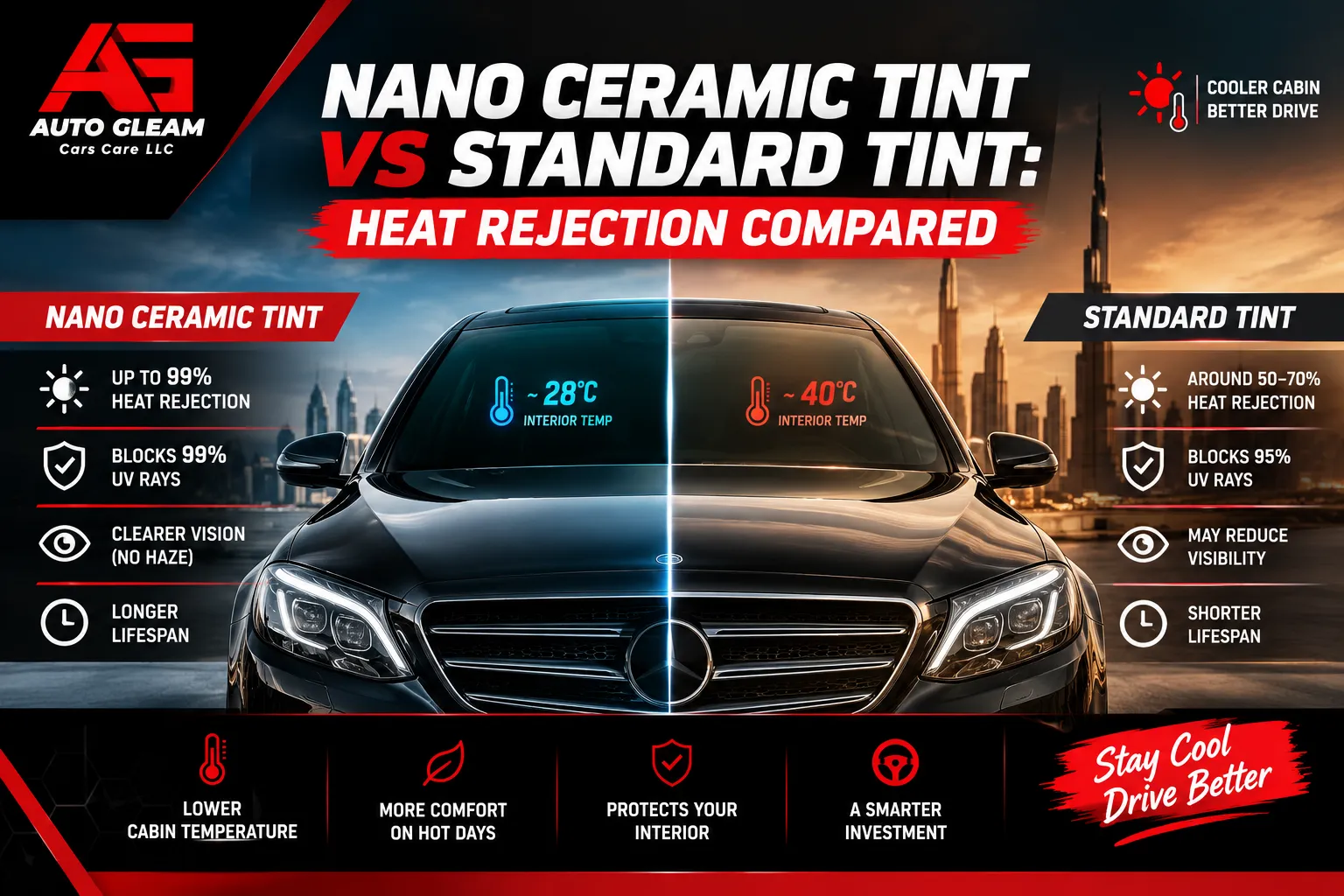
Dyed film typically blocks only a small fraction of infrared heat, often somewhere in a low single-digit to low double-digit percentage range. Carbon film performs considerably better, generally blocking closer to a third to just under half of infrared radiation. Nano ceramic film performs in an entirely different category, with premium ceramic products capable of blocking the vast majority of infrared heat, often into the 80 to high-90s percentage range depending on the specific product and shade.
Total Solar Energy Rejection
Beyond infrared specifically, total solar energy rejection, which accounts for the full combined effect of a film blocking visible, infrared, and other solar energy, also shows a clear gap. Dyed films tend to reject a modest percentage of total solar energy. Carbon film improves on this meaningfully. Ceramic film consistently rejects the highest proportion of total solar energy among the three main film categories, often reaching well beyond what either dyed or carbon film can achieve.
Why the Gap Is So Large
The size of this performance gap surprises a lot of people who assume all “tint” performs roughly similarly once installed. The gap exists because ceramic technology fundamentally changes how the film interacts with solar energy, engineering it specifically to block heat-carrying wavelengths rather than simply relying on general darkness to reduce overall light transmission.
UV Protection: Where the Films Are More Similar
Interestingly, UV protection is one area where the gap between film types narrows considerably. Most quality tint films, whether dyed, carbon, or ceramic, are capable of blocking a very high percentage of harmful UV radiation, often in the high nineties as a percentage. The meaningful difference between film types shows up far more in infrared heat rejection than in UV blocking, which is worth knowing if UV protection alone is your primary concern rather than cabin temperature.
Can You Get Legal Compliance and Real Heat Rejection at the Same Time?
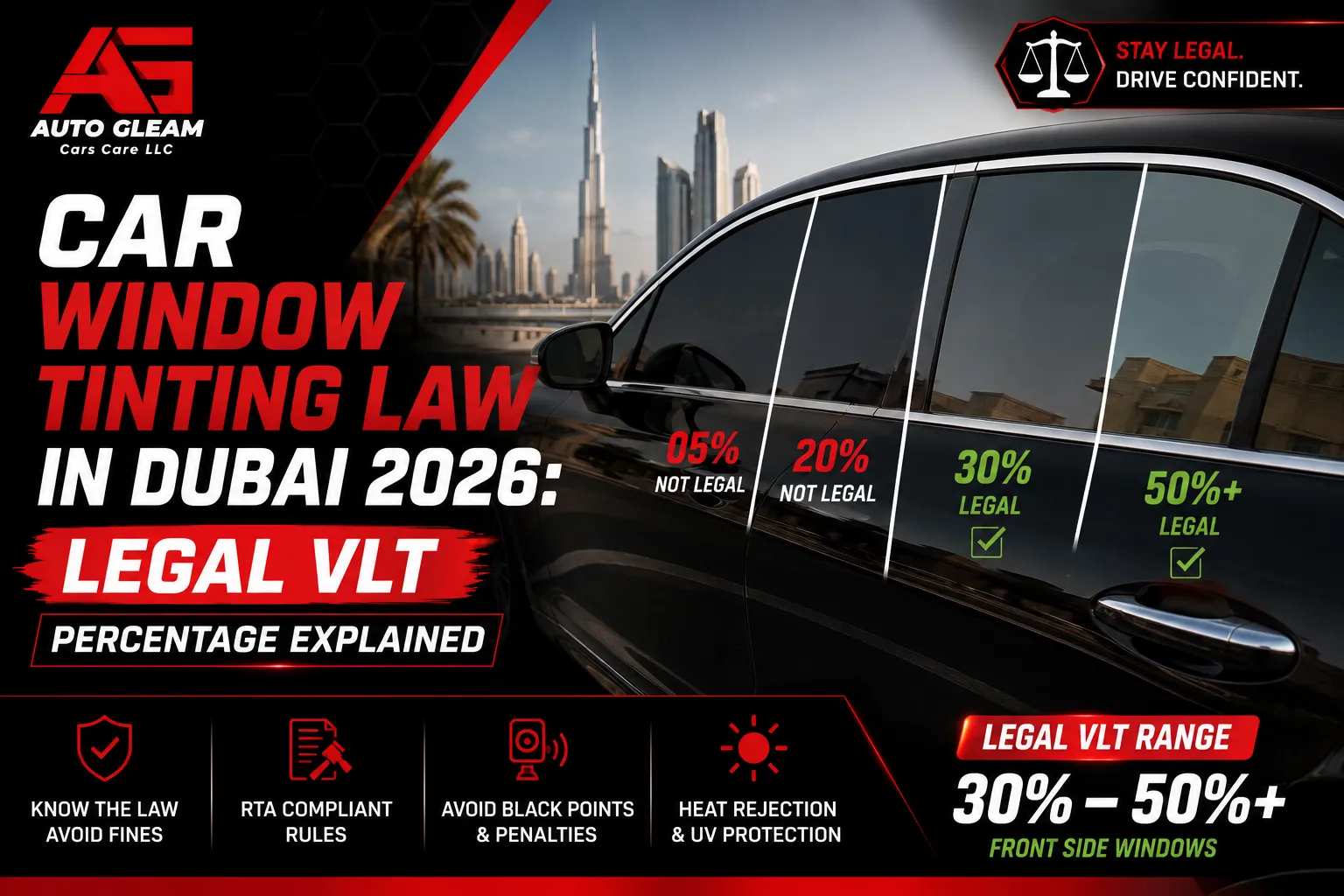
This is the question that actually matters most for practical decision-making, particularly anywhere with a legal VLT darkness limit for private vehicles.
The Common Misconception
Many people assume that if they’re restricted to a lighter, legally compliant VLT percentage, they’re stuck with weak heat protection. This assumption is exactly where standard dyed film falls short, since its heat rejection is closely tied to how dark it is.
Why Ceramic Film Breaks This Trade-Off
A quality nano ceramic film at a lighter, fully compliant VLT percentage can reject dramatically more infrared heat than a much darker dyed film. This happens because ceramic film’s heat-blocking performance comes from its particle technology and construction rather than from overall darkness, meaning you don’t have to choose between staying within a legal limit and actually feeling a noticeable difference in cabin temperature.
Real-World Temperature Differences
Parked Cabin Temperature
Under intense, prolonged sun exposure, a vehicle fitted with dyed film can reach considerably higher interior temperatures than an identical vehicle fitted with nano ceramic film, sometimes with a genuinely noticeable double-digit degree difference between the two after sitting in direct sun for an extended period.
Steering Wheel and Dashboard Surface Temperature
Beyond general cabin air temperature, the surfaces you actually touch, like the steering wheel, gear shifter, and dashboard, absorb radiant heat directly. Ceramic film’s stronger infrared blocking translates into a genuinely noticeable difference in how hot these surfaces get, which matters practically every time you get back into a parked car.
Air Conditioning Load and Cool-Down Time
A cabin that starts noticeably cooler because of better infrared rejection also cools down faster once the air conditioning is running, and places less ongoing strain on the AC system to maintain a comfortable temperature during driving, which matters both for comfort and for fuel or battery efficiency over time.
Signal Interference: A Practical Difference Worth Knowing
This is a less obvious but genuinely practical distinction between film types.
Metallic Film’s Signal Problem
Metallic film’s metal particle construction can interfere with GPS accuracy, Bluetooth connectivity, cellular reception, and toll transponder function, which becomes a real, noticeable annoyance for anyone relying on navigation or hands-free connectivity while driving.
Why Ceramic and Carbon Films Avoid This Issue
Because nano ceramic and carbon films are non-metallic in construction, neither interferes with electronic signals, making them safer choices for modern vehicles that increasingly depend on connected features, sensors, and driver assistance systems that rely on clear signal transmission through the glass.
Longevity and Color Stability
How Dyed Film Ages
Dyed film’s dye layer is prone to breaking down under prolonged UV exposure, which often shows up as gradual fading and, in many cases, a shift toward a purplish tint as the film ages, particularly noticeable in hot, sun-intense climates where UV exposure is constant and severe.
How Ceramic Film Ages
Nano ceramic particles are far more color-stable than dye, resisting fading and discoloration over a much longer period. This means a ceramic film generally maintains both its appearance and its heat rejection performance consistently for significantly longer than a comparable dyed film.
Bubbling and Adhesive Breakdown
Cheaper dyed films are also more prone to bubbling and adhesive failure over time, particularly under prolonged heat exposure, while higher-quality ceramic films generally maintain better long-term adhesion and surface integrity.
Optical Clarity Differences
Daytime Visibility
Quality nano ceramic film, due to its fine particle dispersion, tends to offer excellent optical clarity without introducing haze, maintaining a clean, neutral appearance rather than an artificial tint to the glass itself.
Nighttime Visibility
This is an area where film quality really shows. Poorly made films, particularly cheaper dyed or lower-grade ceramic products, can introduce a degree of haze that becomes more noticeable when driving at night, especially under oncoming headlights. Premium ceramic films are generally engineered to minimize this effect far better than budget film options.
Cost Considerations
Upfront Investment Difference
Nano ceramic film typically costs meaningfully more than standard dyed film at the point of installation, reflecting the more advanced manufacturing process and material technology involved.
Long-Term Value
Because ceramic film tends to last considerably longer without fading, bubbling, or losing performance, and because it doesn’t need to be reinstalled as frequently as a lower-quality dyed film might, the higher upfront cost is often offset over the film’s actual usable lifespan, particularly for anyone planning to keep their vehicle for several years.
Which Option Makes Sense for Different Situations
When Standard Dyed Film Might Be Acceptable
If a vehicle is primarily used in milder climates, parked in shade or covered areas most of the time, or if the priority is simply appearance and basic privacy on a lower budget, standard dyed film can still serve a reasonable purpose, particularly on a secondary or lower-use vehicle where maximum heat rejection isn’t a priority.
When Carbon Film Is a Reasonable Middle Ground
For owners who want a meaningful step up in heat rejection and durability compared to dyed film, without stretching to the premium ceramic price point, carbon film offers a solid balance of performance and cost.
When Nano Ceramic Film Is Worth the Investment
For daily drivers in genuinely hot, sun-intense climates, for vehicles that spend significant time parked outdoors without shade, and for anyone who wants the strongest possible heat rejection while staying within a legally compliant, lighter VLT percentage, nano ceramic film generally represents the strongest overall long-term choice.
Common Misconceptions Worth Clearing Up
“Darker Tint Always Means Cooler”
As covered throughout this guide, darkness relates to visible light transmission, not infrared heat rejection. A lighter, high-quality ceramic film can outperform a much darker, low-quality dyed film in actual cabin cooling.
“All Ceramic Film Performs the Same”
Not all products marketed as ceramic film use genuinely fine, well-dispersed nano-ceramic particles. Quality varies meaningfully between manufacturers, and performance figures should be evaluated on their actual tested specifications rather than assumed based on marketing terminology alone.
“Tint Alone Will Solve All Heat Problems”
Window tint significantly reduces solar heat gain through glass, but it doesn’t eliminate heat from other sources like ambient outdoor temperature or engine heat. It’s an important part of managing cabin temperature, not a complete standalone solution.
“Cheaper Tint Saves Money Overall”
Because lower-quality dyed film tends to fade, bubble, and lose performance faster, it often ends up needing replacement sooner than a quality ceramic installation would, which can narrow or even eliminate the apparent upfront savings over the vehicle’s ownership period.
How to Evaluate Film Quality Before Choosing
Look at Actual Tested Performance Figures
Reputable film manufacturers publish tested infrared rejection and total solar energy rejection figures for their specific products. Comparing these actual numbers, rather than relying on general category labels like “ceramic” or “premium,” gives a much clearer picture of real performance.
Ask About Warranty Coverage
Warranty length and coverage terms often reflect a manufacturer’s confidence in their product’s long-term color stability and adhesion performance, with premium ceramic products frequently backed by considerably longer warranty periods than budget dyed film options.
Consider the Film’s Construction, Not Just Its Marketing Name
Since “ceramic” as a marketing term can be applied loosely, looking into whether a specific product uses genuine nano-particle technology, and checking its tested infrared rejection figures, gives a more reliable basis for comparison than the label alone.
Final Thoughts
The difference between nano ceramic tint and standard tint isn’t a marketing distinction, it’s a genuine difference in how each film interacts with solar energy at a material level. Standard dyed film primarily darkens glass and absorbs some heat, while nano ceramic film is engineered specifically to block infrared radiation before it ever enters the cabin, all while avoiding the signal interference issues that come with metallic alternatives. For anyone driving daily in intense heat, spending meaningful time parked outdoors, or simply wanting the most comfortable, coolest cabin possible without needing to go excessively dark, the performance gap between these two film categories is significant enough to be genuinely felt, not just measured on a spec sheet.
Frequently Asked Questions
Is nano ceramic tint actually better than regular tint, or is it just marketing?
It’s a genuine material difference, not just marketing. Nano ceramic film uses fine, engineered ceramic particles specifically designed to block infrared radiation, resulting in measurably higher heat rejection compared to dyed film at a similar darkness level.
Does darker tint always mean better heat rejection?
No. Darkness relates to visible light transmission, while heat rejection, particularly infrared blocking, depends heavily on the film’s underlying technology. A lighter, high-quality ceramic film can reject more heat than a much darker, low-quality dyed film.
How much more expensive is nano ceramic tint compared to standard tint?
Ceramic film typically costs meaningfully more upfront than dyed film, reflecting its more advanced manufacturing process, though its longer lifespan and better performance retention often offset that gap over time.
Does ceramic tint interfere with GPS or phone signal?
No, ceramic tint is non-metallic, so it doesn’t interfere with GPS, Bluetooth, cellular signals, or toll transponders, unlike metallic film, which can cause signal attenuation.
How long does nano ceramic tint typically last compared to standard tint?
Ceramic film generally lasts considerably longer without fading or bubbling compared to dyed film, which is more prone to breaking down and discoloring under prolonged UV and heat exposure.
Will standard dyed tint eventually turn purple?
Yes, this is a common long-term issue with dyed film, particularly in hot, sun-intense climates, as the dye layer breaks down under prolonged UV exposure over several years.
Can I get strong heat rejection while staying within a legal VLT limit?
Yes, this is one of the biggest practical advantages of ceramic film. High-quality ceramic film at a lighter, fully compliant VLT percentage can block significantly more infrared heat than a much darker standard film.
Is carbon tint a good middle option between dyed and ceramic?
Yes, carbon film offers meaningfully better heat rejection and color stability than dyed film, without the signal interference of metallic film, though it generally doesn’t match true ceramic film’s top-end heat rejection performance.
Does ceramic tint block UV rays better than standard tint?
Most quality films, regardless of type, block a very high percentage of UV radiation. The bigger performance gap between film types shows up in infrared heat rejection rather than UV blocking specifically.
Why does my dyed tint make the cabin feel hot even though it’s very dark?
Dyed film primarily absorbs solar energy rather than blocking it outright, and a portion of that absorbed heat still transfers inward through the glass, which is why even very dark dyed film can offer disappointing actual heat relief.
Is metallic tint better than ceramic tint for heat rejection?
Metallic film does offer meaningful heat rejection through reflection, but it comes with the trade-off of potential signal interference and restrictions on reflective finishes, making ceramic generally the more practical choice for most drivers.
Does nano ceramic tint affect nighttime visibility?
Quality nano ceramic film is generally engineered for strong optical clarity, minimizing haze even at night, though film quality varies between manufacturers, so checking a specific product’s clarity performance is worthwhile.
Can I tell the difference between ceramic and dyed tint just by looking at it?
Not always, since both can appear similarly dark from the outside. The real performance difference shows up in actual heat rejection and long-term color stability rather than initial visual appearance.
Does the brand of ceramic tint actually matter?
Yes, since not all products marketed as ceramic use equally fine, well-dispersed particles or achieve the same tested infrared rejection figures, comparing actual published performance specifications between manufacturers is more reliable than the ceramic label alone.
Will ceramic tint reduce how hot my steering wheel and dashboard get?
Yes, because ceramic film blocks a significantly higher proportion of infrared radiation, surfaces that absorb direct radiant heat, like the steering wheel and dashboard, typically stay noticeably cooler compared to a vehicle with standard dyed film.
Does better heat rejection actually help with fuel or battery efficiency?
Yes, a cooler starting cabin temperature and reduced ongoing solar heat gain place less demand on the air conditioning system, which can meaningfully reduce AC-related energy use during driving.
Is it worth upgrading from old dyed tint to nano ceramic tint?
For anyone experiencing noticeable heat discomfort, fading, or bubbling with existing dyed film, upgrading to nano ceramic film generally delivers a significant, easily noticeable improvement in both comfort and long-term appearance.